Legal Intake Services for Personal Injury Firms: In-House vs Outsourced (2026)
Compare legal intake services in-house vs outsourced for personal injury firms. Real cost-per-signed-case math, response time, after-hours, and bilingual coverage.

Rafael Hernandez
CEO and Co-Founder of Great Marketing AI


I hope you find this useful. If you want our team to run your law firm's performance marketing, book a strategy call.
Author: Rafael Hernandez | CEO and Co-Founder of Great Marketing AI
Key Takeaways
- Legal intake services are the people, software, and process that turn an inbound inquiry into a signed retainer. The buy-vs-build decision comes down to response speed, after-hours coverage, and cost per signed case.
- Outsourced legal intake removes the salary, benefits, training, and office overhead of an in-house team, so for most firms it costs a fraction of equivalent full-time staffing. The right benchmark is cost per signed case, not the monthly invoice.
- Speed wins cases. Leads contacted within five minutes are 21 times more likely to qualify than leads contacted after 30 minutes (Harvard Business Review). The intake model that answers fastest signs the case, regardless of who runs it.
- A hybrid model, in-house coordinators during business hours plus an outsourced after-hours service, captures the nights-and-weekends leads that most firms route to voicemail.
- For firms targeting Spanish-speaking claimants, bilingual intake is not optional. An English-only intake path silently loses a large share of MVA inquiries.
Last Updated: June 15, 2026
Legal intake services are the people, software, and process that convert an inbound inquiry into a signed retainer. The decision most personal injury firms face is not whether to invest in intake but how: build an in-house team, outsource to a dedicated legal intake company, or run a hybrid of both. The right answer depends on three variables, response speed, after-hours coverage, and cost per signed case, not on which option has the lowest monthly invoice.
Here is the short version. In-house intake gives you the most control and works best for firms with high daytime volume and a manager to supervise. Outsourced legal intake services win on after-hours coverage and lower total cost, because a pay-for-performance service carries none of the salary, benefits, and office overhead of a staffed team, which is why Legal Conversion Center notes that cost per retained case tends to fall when you only pay for work performed. The hybrid model, in-house by day plus an outsourced service for nights and weekends, captures the most cases for most firms. This guide breaks down the buy-vs-build decision with a real cost-per-signed-case comparison you can apply to your own numbers.

What Legal Intake Services Actually Do
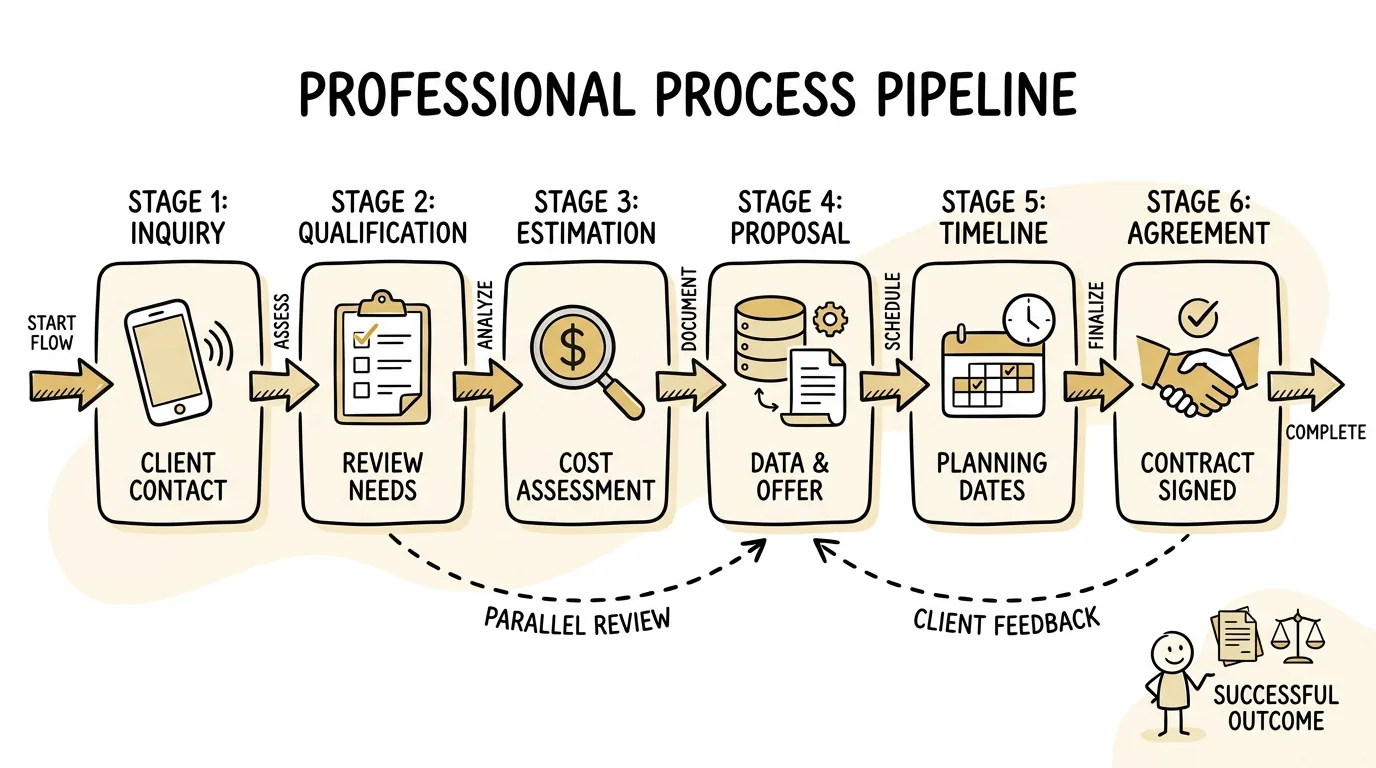
A legal intake service is more than an answering service. The job spans the full path from first contact to signed retainer agreement. A complete client intake process law firm function handles inbound calls, form fills, and law firm live chat, asks qualification questions, performs case value screening, runs a conflict check, captures contact details into legal client intake software, and schedules the attorney consultation. The best providers also handle missed-call recovery and a structured follow-up sequence so leads that do not convert on first contact are not abandoned.
This is distinct from optimizing the intake you already run. If your goal is to improve sign rate and lead response time inside your existing setup, that is a process problem covered in our law firm intake optimization guide. This guide is about the upstream decision: who should run intake in the first place, your own staff or an outside legal intake service.
The reason intake matters at all is speed. Research on lead response, including the landmark Harvard Business Review study of more than 2,000 companies, found that leads contacted within five minutes are 21 times more likely to qualify than leads contacted after 30 minutes. The intake structure underneath this guide, the intake and conversion tech that decides which firm answers first, is what separates the firms that sign cases from the firms that lose them. Whether you build or buy, the model that produces the fastest qualified first contact wins the case.
In-House vs Outsourced vs Hybrid: The Cost-Per-Signed-Case Comparison
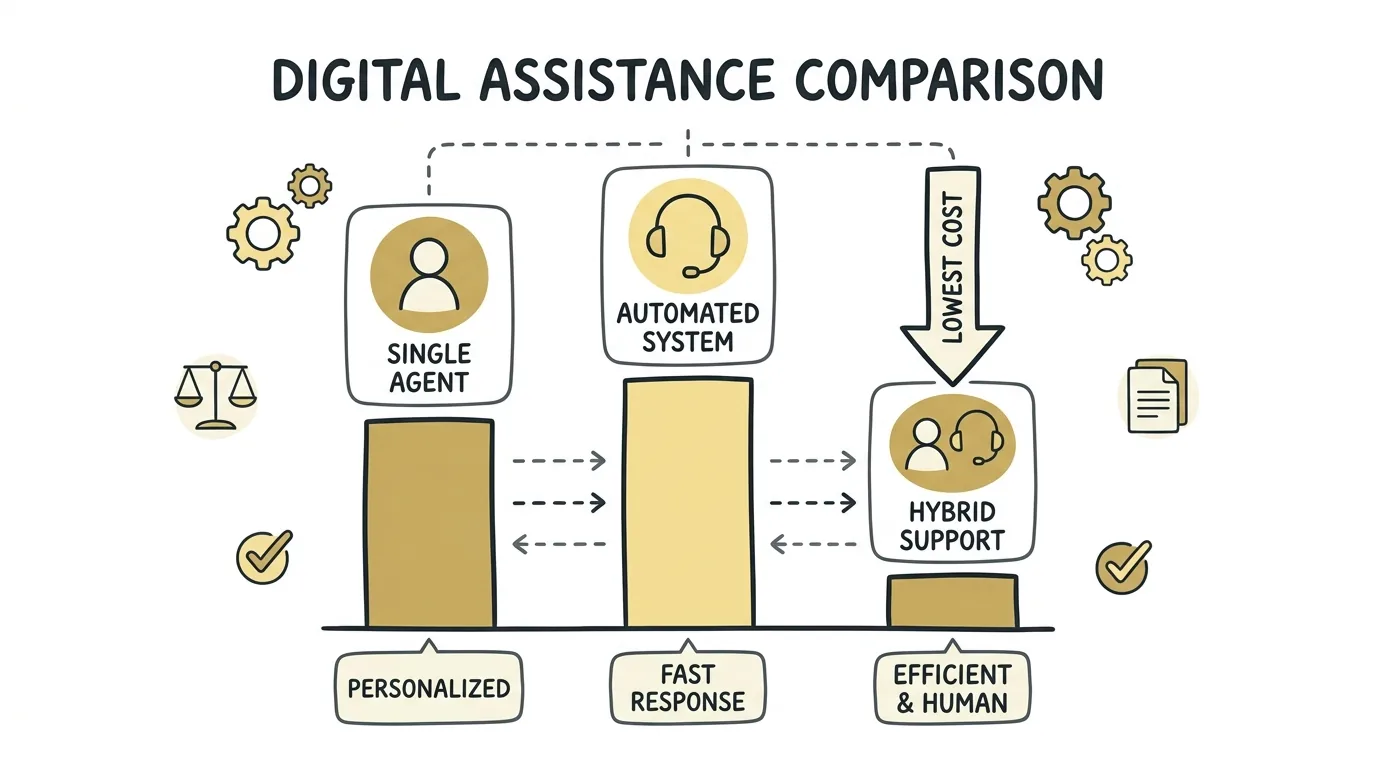
The deciding metric is cost per signed case, total monthly intake spend divided by the signed cases that intake produced. A $4,000 in-house team that signs eight cases beats a $600 service that signs one. The table below is Great Marketing AI's working comparison framework, built from running intake-dependent paid campaigns for personal injury firms across California, Texas, and Florida. Individual results vary by market and case mix.
| Factor | In-House Intake | Outsourced Service | Hybrid Model |
|---|---|---|---|
| Typical monthly cost | $3,500-$6,000+ (salary, benefits, overhead) | $300-$800 after-hours; more for dedicated teams | In-house base plus $300-$800 outsourced layer |
| Response time (business hours) | Under 2 minutes if staffed and trained | Under 2 minutes (their core job) | Under 2 minutes |
| After-hours coverage | Usually none or voicemail | 24/7 live | 24/7 live via the outsourced layer |
| Bilingual / Spanish-speaking | Only if you hire for it | Provider-dependent, verify fluency | Staff in-house, outsource overflow |
| Control over script and brand voice | Highest | Lower, requires onboarding | High in-house, managed for the service |
| Scales with caseload | Slowly, you must hire | Quickly, capacity flexes | Quickly |
| Best for | High daytime volume with a supervisor | Firms losing nights and weekends | Most growth-focused PI firms |
The pattern is consistent: outsourcing strips out the salary, benefits, training, and office space that make an in-house team expensive, so its total cost runs well below an equivalent full-time hire. But raw savings is not the point. The hybrid model usually produces the lowest cost per signed case because it pairs in-house control during peak hours with cheap, always-on after-hours capture.
The After-Hours Math That Decides It
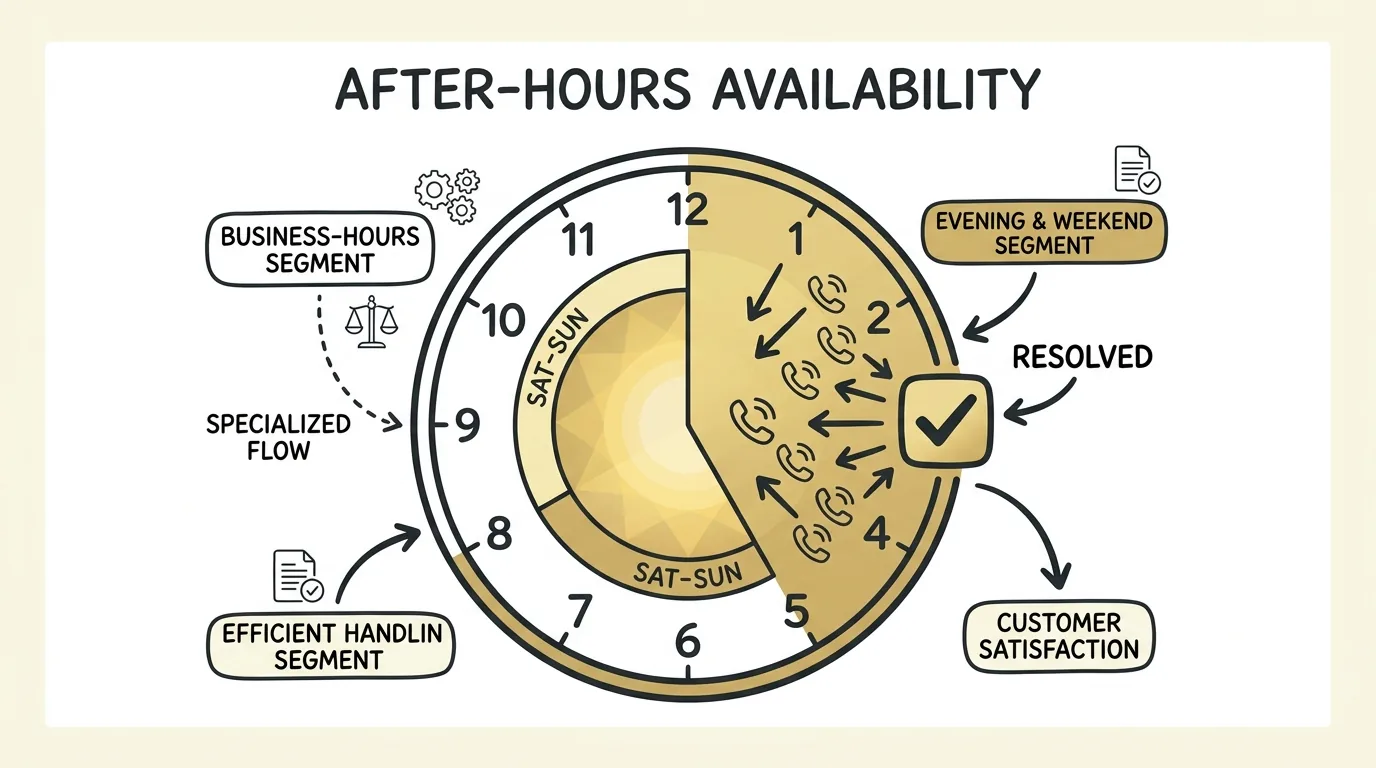
The single strongest argument for outsourced or hybrid legal intake services is after-hours coverage. Motor vehicle accidents do not respect business hours. A large share of personal injury inquiries arrive on Friday nights, weekends, and late evenings, exactly when most firms route calls to voicemail.
A prospect injured on a Saturday is contacting multiple firms at once. The firm that answers live wins. The Harvard Business Review research cited above, which tracked lead response across more than 2,000 companies, found that leads contacted within five minutes are 21 times more likely to qualify than leads contacted after 30 minutes. After hours, an in-house team is asleep and that 21x advantage goes to whoever has live coverage.
This is where a dedicated after-hours answering service earns its keep. At $300 to $800 per month, the ROI requires capturing only one additional case worth $5,000 to $50,000. The requirement is a clean case management handoff: the service collects date of accident, injuries, at-fault party, and whether the prospect already hired counsel, then pushes that into your CRM so your team has full context for the morning callback.
Bilingual Intake: The Differentiator Most Firms Miss
For personal injury firms competing in markets with large Hispanic populations, Spanish-speaking intake is the highest-leverage intake decision there is. Marketing dollars routinely generate Spanish-dominant MVA inquiries, and then an English-only intake path loses them at first contact. The lead was paid for, the prospect called, and the conversation collapsed because no one could speak their language.
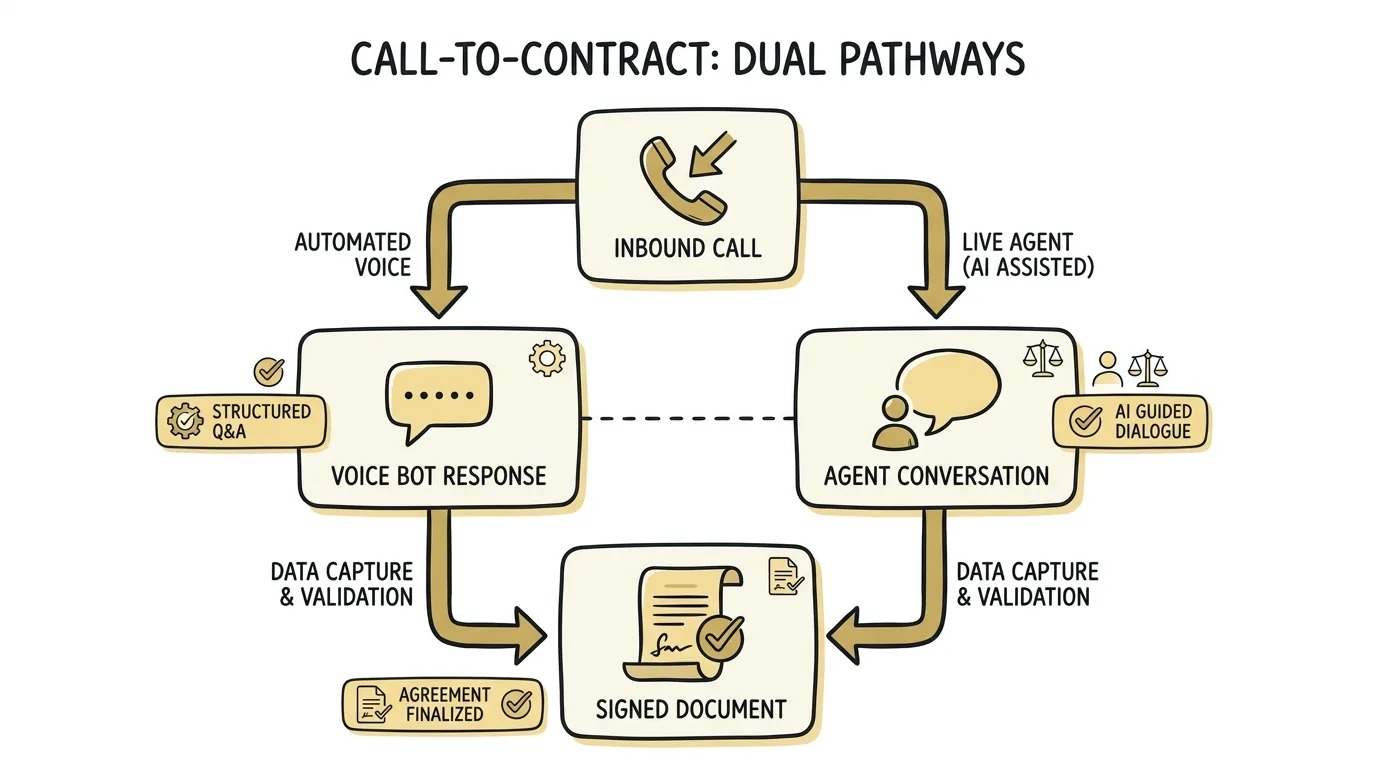
This is the gap Great Marketing AI built around: native motor vehicle accident leads paired with intake that speaks the prospect's language from the first ring. If you outsource, fluency is non-negotiable. Confirm a provider staffs fluent, not merely conversational, bilingual intake specialists before you sign. A bilingual intake script and warm transfer path should mirror your English process exactly, including qualification questions and the consultation offer.
In-house gives you the most control here, since you can hire bilingual coordinators directly. The hybrid approach staffs Spanish-speaking intake in-house and outsources overflow to a provider that has verified bilingual capacity. Either way, the firms winning Spanish-speaking MVA cases are the ones whose intake never forces a language switch.
How to Choose: A Practical Decision Path
Start with your numbers, not a vendor pitch. Map your current client intake process law firm end to end, then pull your last 90 days of inquiries and answer four questions. First, what share of leads arrive outside 8 AM to 8 PM? If it is above 25%, after-hours coverage alone will likely pay for an outsourced layer. Second, what is your current business-hours response time? If you cannot consistently hit two minutes with existing staff, outsourcing or adding a coordinator is overdue. Third, what channels do prospects actually use, phone, a personal injury intake form, or law firm live chat? Coverage gaps differ by channel, and a personal injury intake form left unanswered overnight is its own leak. Fourth, what is your current lead-to-signed conversion?
Then run the cost per signed case math for each model against those numbers. Most growth-focused personal injury firms land on hybrid: keep daytime intake in-house for control, layer an outsourced after-hours service for coverage you cannot economically staff. Whatever you choose, the platform underneath matters. Purpose-built legal client intake software, a true law firm CRM with speed to lead automation, e-signature via DocuSign, and automated routing, is what makes any intake model perform, in-house or outsourced. If you are choosing between specific platforms, our Clio vs MyCase comparison for personal injury firms breaks down how the two most popular options handle intake, automation, and bilingual sequences.
As a personal injury law firm marketing agency, the consistent finding across our clients is that intake structure, not lead volume, is the bottleneck. Fixing who answers and how fast produces more signed cases from the ad spend you already have.
"Most personal injury firms think they have a lead problem. They actually have an intake problem. The leads are calling. No one is answering fast enough, and after 6 PM no one is answering at all. The firm that picks up first, in the caller's own language, signs the case. That is the entire game, and it is the cheapest thing in marketing to fix." Rafael Hernandez, CEO and Co-Founder of Great Marketing AI
The Bottom Line on Legal Intake Services
There is no single right legal intake service model, only the one with the lowest cost per signed case for your firm's volume, hours, and language mix. In-house buys control. Outsourcing buys cost savings and always-on coverage. Hybrid usually buys both. The firms that win are the ones that treat intake as a revenue system to be measured, not an administrative cost to be minimized.
If you are losing leads after 6 PM or on weekends, start there: an after-hours service is the fastest payback in the entire decision. If your market is heavily Hispanic, make bilingual intake the first requirement, not an afterthought. And whatever model you build, pair it with a deliberate lead nurture sequences strategy so the leads that do not sign on first contact stay warm until they do.
If you want a partner that builds the lead channel and the intake system as one machine, work with an agency that lives in Spanish-speaking MVA lead generation. Book a strategy call or reach out through our contact page and we will map your current intake, find where leads leak, and build the model with the lowest cost per signed case for your firm.
Rafael Hernandez is the CEO and Co-Founder of Great Marketing AI, a performance marketing agency for personal injury law firms. Great Marketing AI specializes in Spanish-speaking MVA lead generation and has managed lead generation campaigns for PI firms across California, Texas, and Florida.
Turn Ad Spend Into Signed Cases
We blend AI-driven testing with proven performance strategy to attract qualified traffic and turn it into revenue—fast, trackable, and scalable.
- PI Lead Generation — exclusive, AI-qualified leads across MVA, slip & fall, med mal, and more.
- Facebook & Instagram Ads — reach customers where they scroll.
- Google Ads — capture people actively searching for you.
- Website Design — turn visitors into buyers with high-converting sites.
- AI Automations — save hours and never miss a follow-up.
- Email Marketing — nurture leads and close sales on autopilot.
- SEO — get found by customers searching for what you sell.
FAQs

About the author
Rafael Hernandez
CEO and Co-Founder of Great Marketing AI
Rafael Hernandez is the Founder of Great Marketing AI and a former Microsoft Engineer. He specializes in performance marketing for personal injury law firms, managing over $10M in ad spend to help attorneys generate signed cases across every PI case type. His strategies focus on exclusive lead generation, AI-powered qualification, and eliminating wasted budget.
About Great Marketing AI
Great Marketing AI: Performance marketing for personal injury law firms
We help personal injury law firms scale with exclusive, AI-qualified leads across every PI case type: MVA, slip & fall, medical malpractice, and wrongful death. Native English and Spanish campaigns, enterprise-grade Meta + Google ad management, and AI lead qualification before every intake.
100% Exclusive Leads
Never shared between firms. Territory-protected.
Native Spanish & English Campaigns
Built by native speakers, not Google Translate.
AI Lead Qualification
Pre-qualified before they ever reach your intake team.