Clio vs MyCase for Personal Injury Firms: Which Legal CRM Wins in 2026?
Clio vs MyCase compared through a personal injury lens: pricing, intake speed, lead-to-signed workflow, and bilingual support. See which legal CRM wins.

Rafael Hernandez
CEO and Co-Founder of Great Marketing AI


I hope you find this useful. If you want our team to run your law firm's performance marketing, book a strategy call.
Author: Rafael Hernandez | CEO and Co-Founder of Great Marketing AI
Key Takeaways
- For most personal injury firms, the `clio vs mycase` decision comes down to scope: Clio is the deeper, more extensible platform with a dedicated intake CRM (Clio Grow), while MyCase is the simpler, lower-cost all-in-one that bundles a Legal CRM into its Pro and Advanced tiers.
- MyCase publishes flat per-user pricing (Basic $50, Pro $100, Advanced $130 per user per month billed annually), and its built-in Legal CRM and client intake forms start at the Pro tier. Clio publishes EasyStart at $49 per user per month and quotes higher tiers (Essentials, Advanced, Expand) on request, with Clio Grow bundled into the top plan or sold as an add-on.
- Through a PI lens, the feature that decides cases is speed-to-lead, not invoicing. Whichever platform lets you auto-text a new MVA lead in under a minute and route it to a bilingual intake specialist will outperform the prettier dashboard every time.
- Pick MyCase if you want one affordable system for a smaller firm and value simplicity. Pick Clio if you want a larger app ecosystem, a separate intake-focused CRM in Clio Grow, and room to scale a high-volume PI practice.
- Both tools are conversion multipliers, not lead sources. The biggest sign-rate gains come from pairing either CRM with a clean, exclusive lead channel, which is why we treat the CRM and the lead source as one revenue system.
Last Updated: June 15, 2026
For a personal injury firm choosing between the two best-known legal platforms, the clio vs mycase decision comes down to scope and price. Clio is the deeper, more extensible system with a dedicated intake CRM called Clio Grow and the largest integrations marketplace in legal software. MyCase is the simpler, lower-cost all-in-one that folds a Legal CRM and client intake forms into its mid and top tiers. Both run a PI firm's matters competently, and both rank among the most-evaluated law firm crm software options on the market. The real question is which one wins more cases, and for personal injury that is decided at intake, not invoicing.
Here is the short answer. Choose MyCase if you are a smaller firm that wants one affordable platform with predictable per-user pricing and minimal setup. MyCase publishes flat pricing of Basic $50, Pro $100, and Advanced $130 per user per month billed annually, with its Legal CRM and intake forms starting on the Pro tier. Choose Clio if you want a separate intake-focused CRM in Clio Grow, a far larger app ecosystem, and headroom to scale a high-volume MVA practice. Clio lists EasyStart at $49 per user per month and quotes its higher tiers on request.
This comparison is scored through a PI firm's lens: speed-to-lead, lead-to-signed workflow, bilingual support, and how each tool plugs into your marketing stack. It builds on the buyer framework in our law firm CRM buyer's guide, written for firms that treat intake as a revenue system. As a marketing agency for law firms, we wire these tools into the lead channel every day, so the verdicts below come from running real PI intake, not a spec sheet.

Clio vs MyCase: The Core Difference
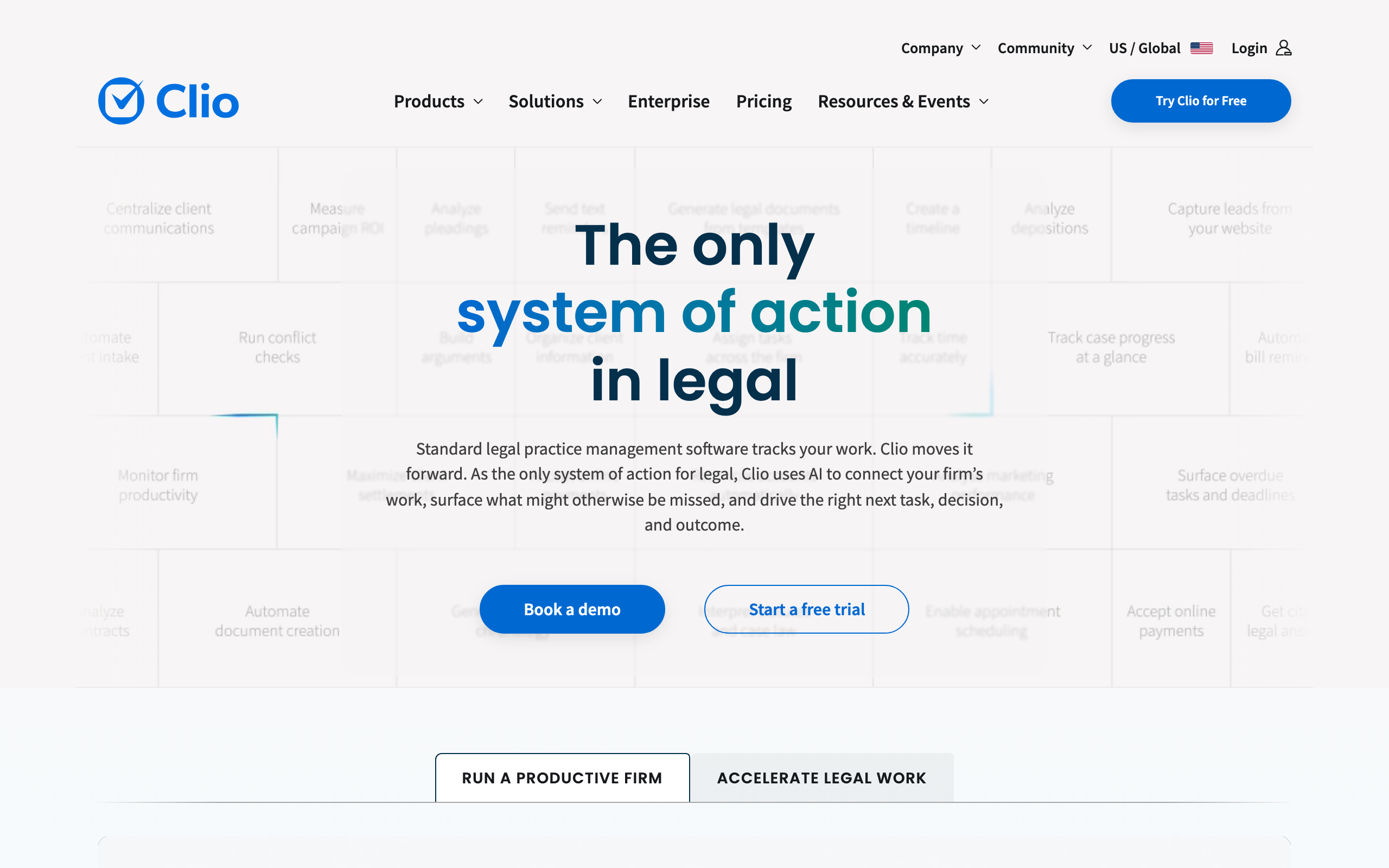
The cleanest way to frame clio vs mycase is platform breadth versus all-in-one simplicity. Clio is built as a system you extend. Its practice management product, Clio Manage, connects to more than 250 integrations, and its intake CRM, Clio Grow, is a distinct product designed specifically to win leads before they sign. That separation is a strength for firms that want a purpose-built intake layer and a weakness for firms that just want one login.
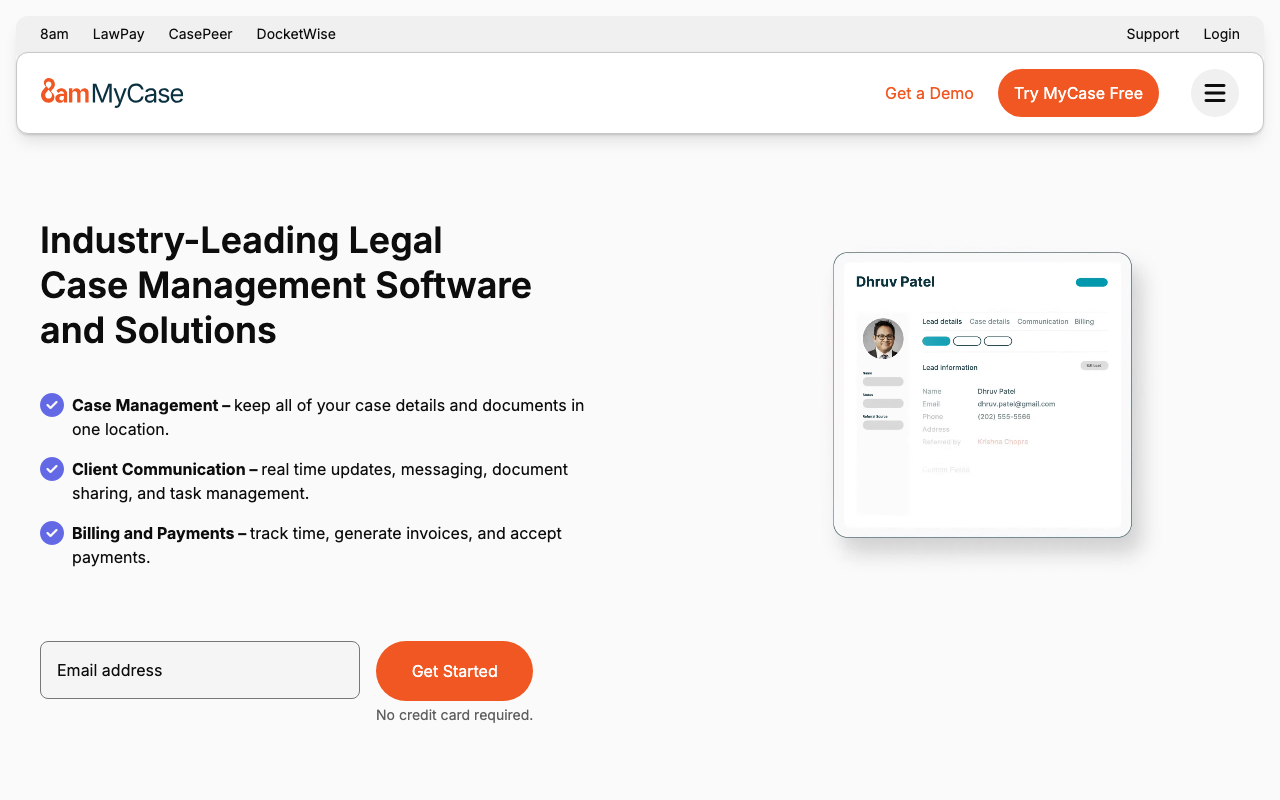
MyCase takes the opposite approach. It is one platform that covers case management, billing, documents, and, on its Pro and Advanced tiers, a built-in Legal CRM with client intake forms. For a smaller personal injury firm, that consolidation means less setup, one vendor, and a lower starting price. The tradeoff is a smaller integrations footprint and less marketing-automation depth than a dedicated intake tool. Neither approach is wrong. The right one depends on whether your bottleneck is running matters or capturing leads, which for most PI firms is the latter.

Pricing: What Each Platform Actually Costs
Pricing is where the clio vs mycase comparison diverges most clearly, and where you should be careful to use real numbers. MyCase is transparent: per its official pricing page, the plans are Basic at $50, Pro at $100, and Advanced at $130 per user per month when billed annually. The Legal CRM and customizable client intake forms appear starting on the Pro tier, so a PI firm that wants intake automation should budget for Pro or Advanced rather than Basic.
Clio is less transparent on its public page. Per Clio's pricing page, EasyStart starts at $49 per user per month, while the Essentials, Advanced, and Expand tiers are quoted on request rather than listed. Clio Grow, the intake CRM, is bundled into the top Expand plan or sold as an add-on, so the true cost of running Clio for intake is higher than the headline EasyStart figure. The honest takeaway: MyCase is easier to price out, while Clio requires a sales conversation to compare top tiers. For a PI firm, either cost is small against a single signed MVA case.

The PI Lens: Speed-to-Lead Beats Everything Else
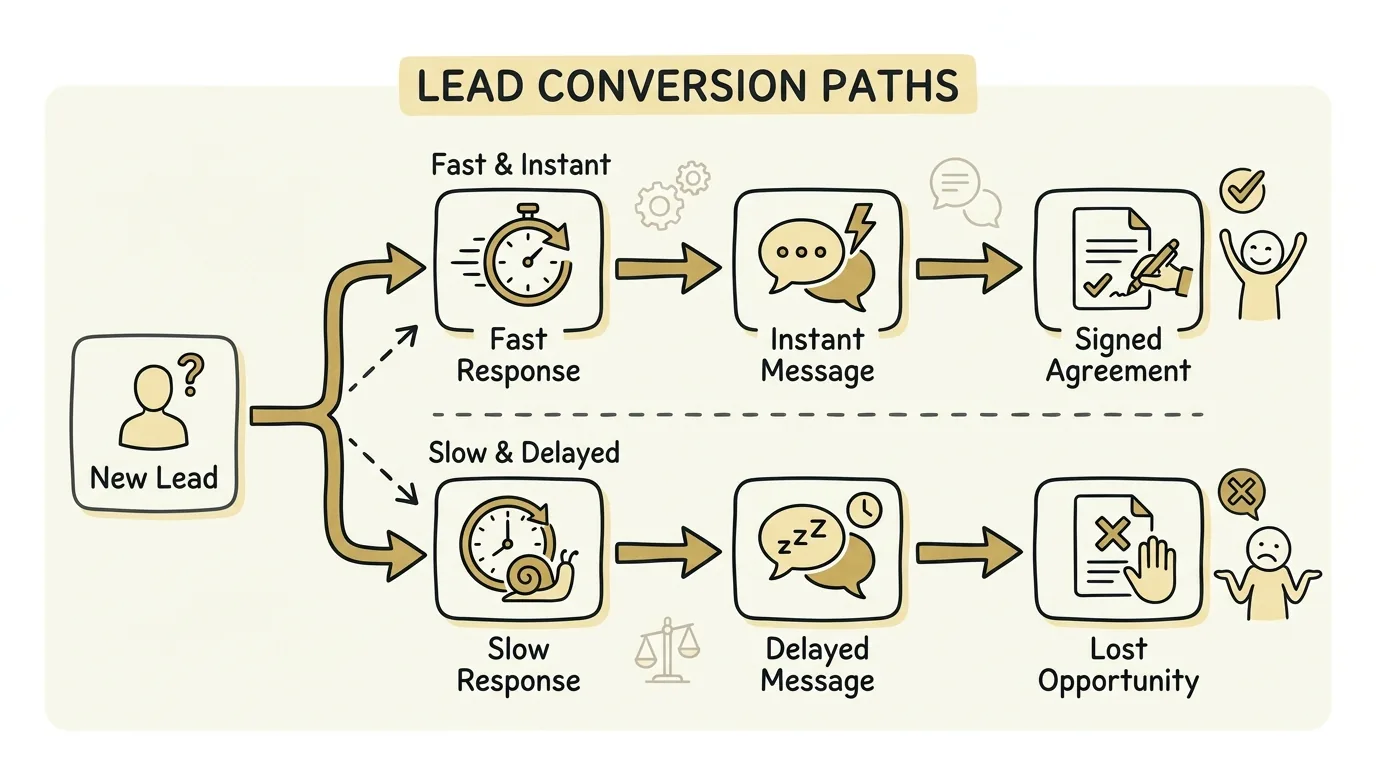
Here is the criterion most generic reviews bury. For a personal injury firm, the single highest-leverage feature is automated speed-to-lead, because the claimant usually hires the first attorney who responds. Leads contacted within five minutes are 21 times more likely to convert than leads contacted after 30 minutes, according to the Lead Response Management study led by Professor James Oldroyd. An MVA claimant who fills out three firms' forms at 11 PM signs with whoever texts back first.
Score clio vs mycase on that race, not on billing screens. Clio Grow is built for intake follow-up and pairs with automated workflows; MyCase's Legal CRM offers lead management and intake forms inside the same app. Both can be configured to fire an instant text and assign an intake task, but you must build and test that sub-minute touch yourself. The platform that lets your team automate the first response, including nights and weekends, will outperform the one with the prettier reporting dashboard. Software is only half the answer, though: pair either CRM with the right people, whether that is an in-house team or outsourced legal intake services, and the sign-rate math changes.
Feature-by-Feature Comparison Table
The clio vs mycase table below scores both platforms on the criteria that matter to a personal injury practice. Pricing reflects each vendor's publicly listed figures as of June 2026 and should be confirmed directly, since legal software is frequently quoted per firm.
| Criterion | Clio | MyCase |
|---|---|---|
| Starting price | EasyStart from ~$49 / user / mo (annual); higher tiers quoted | Basic $50, Pro $100, Advanced $130 / user / mo (annual) |
| Dedicated intake CRM | Yes, Clio Grow (separate product) | Built-in Legal CRM on Pro and Advanced tiers |
| Client intake forms | Yes, via Clio Grow | Yes, customizable forms (Pro and up) |
| Practice management | Yes, Clio Manage | Yes, included in all tiers |
| Integrations marketplace | 250+ app integrations | Smaller native integration set |
| Marketing automation depth | Moderate (deeper via Clio Grow + add-ons) | Lighter, lead-management focused |
| Bilingual / Spanish intake | DIY templates, no turnkey bilingual flow | DIY templates, no turnkey bilingual flow |
| Best for | Scaling, high-volume, ecosystem-heavy firms | Smaller firms wanting affordable all-in-one |
| Free trial | 7 days, no credit card | 10 days, no credit card |
Two honest caveats. Neither platform ships a turnkey bilingual intake experience, so Spanish-speaking MVA markets require you to author Spanish sequences and route to a bilingual specialist on whichever tool you pick. And the integrations gap is real: Clio's marketplace is materially larger, which matters more the more tools your stack already has.
The Verdict: Which One Wins for Your Firm
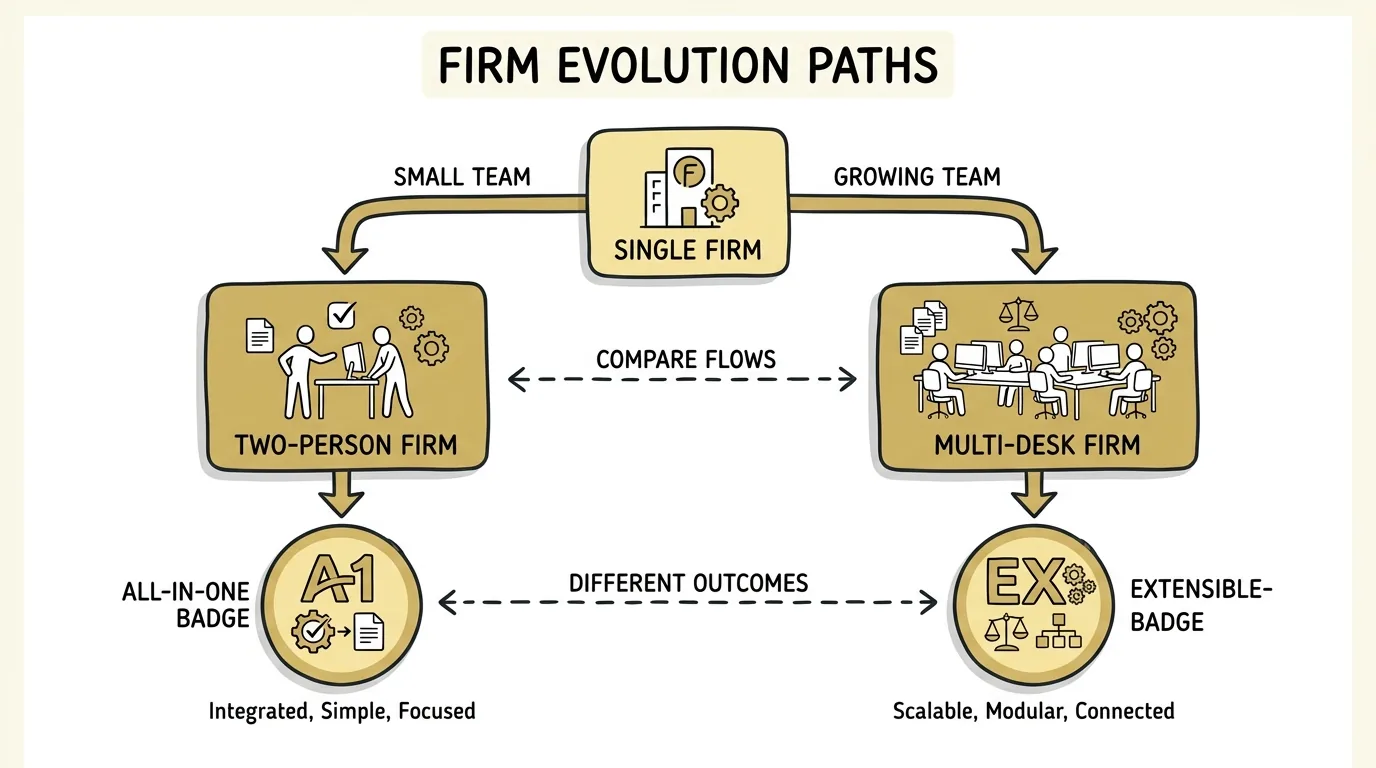
There is no universal winner in clio vs mycase; there is a winner for your firm size and growth plan. MyCase wins for a smaller PI firm that wants one affordable, predictable platform with intake forms and a Legal CRM bundled in, minimal setup, and a single vendor relationship. Its flat per-user pricing makes budgeting simple, and its all-in-one design means a two-attorney MVA practice can be live in days.
Clio wins for a firm that is scaling, runs aggressive paid acquisition, or wants a dedicated intake layer. Clio Grow as a separate intake CRM, the 250-plus integrations marketplace, and the room to add Clio Manage for full practice management make it the better long-term platform for high-volume PI and MVA firms. The cost of Clio's flexibility is a sales conversation to price the higher tiers and a steeper initial setup. For most growing PI firms that buy a meaningful volume of lead generation for lawyers, Clio's headroom justifies the extra effort, while truly lean firms are better served by MyCase.
Other Legal CRMs Worth Considering
Clio and MyCase are the best all-in-one starting points, but for a PI firm whose core challenge is high-volume intake rather than general practice management, three clio alternatives deserve a look. They are also worth weighing as MyCase or clio alternatives if you have outgrown an entry-tier all-in-one. Lawmatics has the deepest marketing automation and CRM layer of any legal intake tool, making it the strongest pick for firms running heavy paid campaigns where follow-up sequences, referral tracking, and attribution are the priority. Filevine pairs robust case management with a full intake suite, so firms that want one platform for both signed matters and lead capture get tight data flow without a separate sync. Lead Docket, which is part of Filevine, is purpose-built for plaintiff intake: it routes and triages new inquiries by case type, jurisdiction, and case value, which is exactly the qualification a busy MVA practice needs.
For most firms, the choice still comes down to Clio or MyCase. But if you process hundreds of inquiries a month, a dedicated intake platform can outperform an all-in-one. We are publishing a dedicated "Best Legal CRM for Personal Injury Firms" roundup that scores all of these head to head, so check back for the full breakdown.
How to Make Either CRM Pay Off
The most common failure is buying a capable CRM and never wiring it to the lead source, so leads still land in an inbox and the automation never fires. That is true whether the clio vs mycase decision lands on one or the other. Whichever platform you choose, connect every lead channel directly into it by API or native integration: your Google Ads, Facebook lead forms, website forms, and tracked phone numbers, so nothing routes through a human inbox first. Build the sub-minute auto-text and auto-email before anything else, because that is where the sign-rate gain lives. Write Spanish-language versions of every sequence if you serve Spanish-speaking claimants. Then wire attribution so each signed case reports its source campaign.
Done right, the CRM stops being a software expense and becomes the highest-ROI line item in the practice. Done wrong, it is a prettier inbox. The discipline matters more than the logo on the login screen.
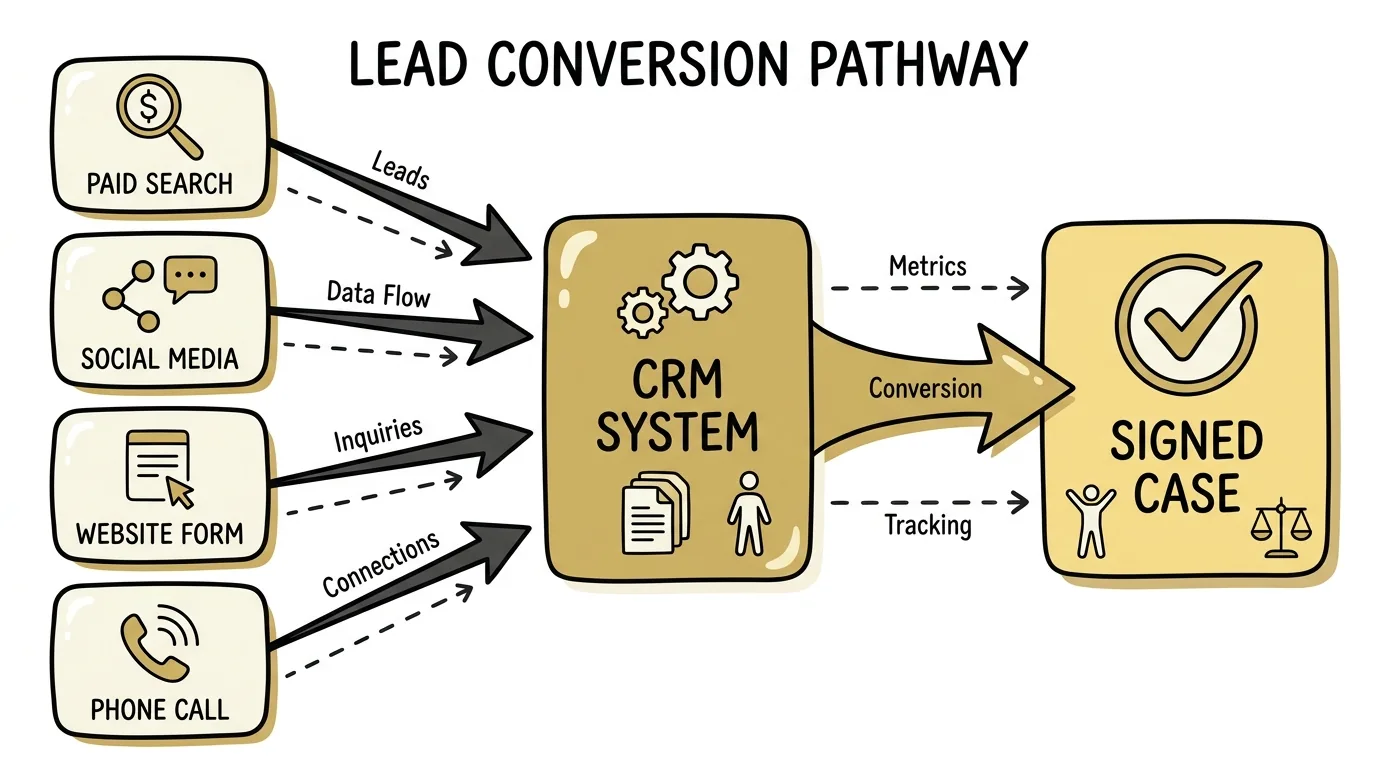
The CRM Is Only Half the System
A legal CRM is a conversion multiplier, and a multiplier applied to a weak lead source still produces weak results. If the leads feeding Clio or MyCase are shared, mispriced, or outside your case types, faster automation just gets you to a dead end quicker. This is the single most important thing a PI firm can understand about CRM ROI: the tool amplifies whatever you feed it.
That is why we treat the CRM and the lead channel as one system. Clean, exclusive motor vehicle accident leads feeding a fast-intake CRM is what moves a firm from a 14% sign rate toward 40% or more on the same traffic.
"The firms that win in personal injury are not the ones that spend the most on software. They are the ones whose intake answers first, qualifies fast, and never lets a lead sit. Clio or MyCase, it does not matter which logo you pick if the lead source feeding it is broken." Rafael Hernandez, CEO and Co-Founder of Great Marketing AI
Conclusion
The clio vs mycase choice is really a choice about your firm's stage. MyCase is the affordable, simple all-in-one that wins for smaller PI firms; Clio is the extensible, scalable platform with a dedicated intake CRM that wins for firms running high-volume paid acquisition. Score both on speed-to-lead and bilingual follow-up, not billing screens, and confirm current pricing on each vendor's site before you sign.
No law firm crm software wins on its own. Then make the lead source as good as the software. If you want a partner that builds the lead channel and the intake system as one machine, work with an agency that lives in the PI niche. Sharpen the follow-up further with our guide to attorney email marketing, then book a strategy call to map out your full intake system so your spend finally turns into signed cases.
Turn Ad Spend Into Signed Cases
We blend AI-driven testing with proven performance strategy to attract qualified traffic and turn it into revenue—fast, trackable, and scalable.
- PI Lead Generation — exclusive, AI-qualified leads across MVA, slip & fall, med mal, and more.
- Facebook & Instagram Ads — reach customers where they scroll.
- Google Ads — capture people actively searching for you.
- Website Design — turn visitors into buyers with high-converting sites.
- AI Automations — save hours and never miss a follow-up.
- Email Marketing — nurture leads and close sales on autopilot.
- SEO — get found by customers searching for what you sell.
FAQs

About the author
Rafael Hernandez
CEO and Co-Founder of Great Marketing AI
Rafael Hernandez is the Founder of Great Marketing AI and a former Microsoft Engineer. He specializes in performance marketing for personal injury law firms, managing over $10M in ad spend to help attorneys generate signed cases across every PI case type. His strategies focus on exclusive lead generation, AI-powered qualification, and eliminating wasted budget.
About Great Marketing AI
Great Marketing AI: Performance marketing for personal injury law firms
We help personal injury law firms scale with exclusive, AI-qualified leads across every PI case type: MVA, slip & fall, medical malpractice, and wrongful death. Native English and Spanish campaigns, enterprise-grade Meta + Google ad management, and AI lead qualification before every intake.
100% Exclusive Leads
Never shared between firms. Territory-protected.
Native Spanish & English Campaigns
Built by native speakers, not Google Translate.
AI Lead Qualification
Pre-qualified before they ever reach your intake team.