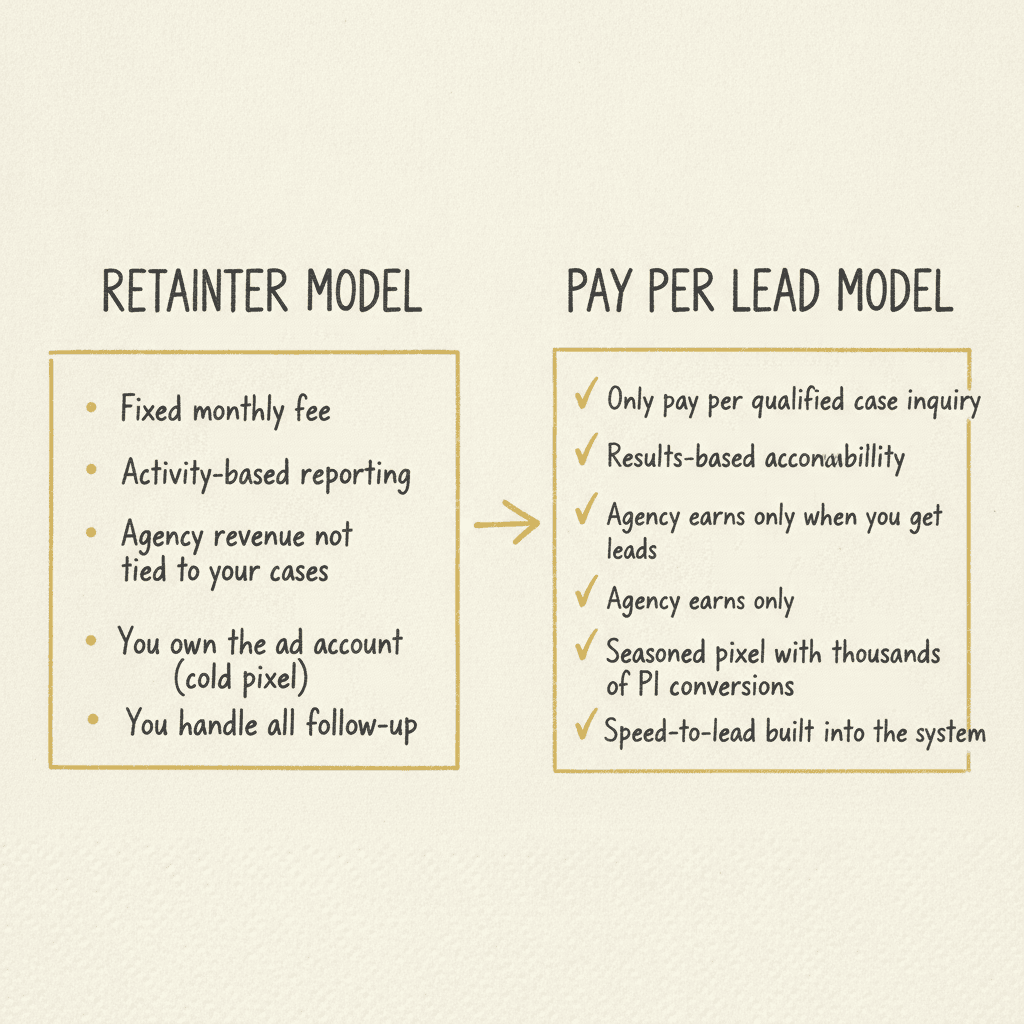
How Pay Per Lead Marketing Agencies Work: A Guide for PI Law Firms
How do pay per lead marketing agencies actually make money — and what does that mean for your PI law firm? Learn the three pillars behind profitable PPL lead delivery.

Rafael Hernandez
CEO and Co-Founder of Great Marketing AI

I hope you find this useful. If you want our team to run your law firm's performance marketing, book a strategy call.
Author: Rafael Hernandez | CEO and Co-Founder of Great Marketing AI
Key Takeaways
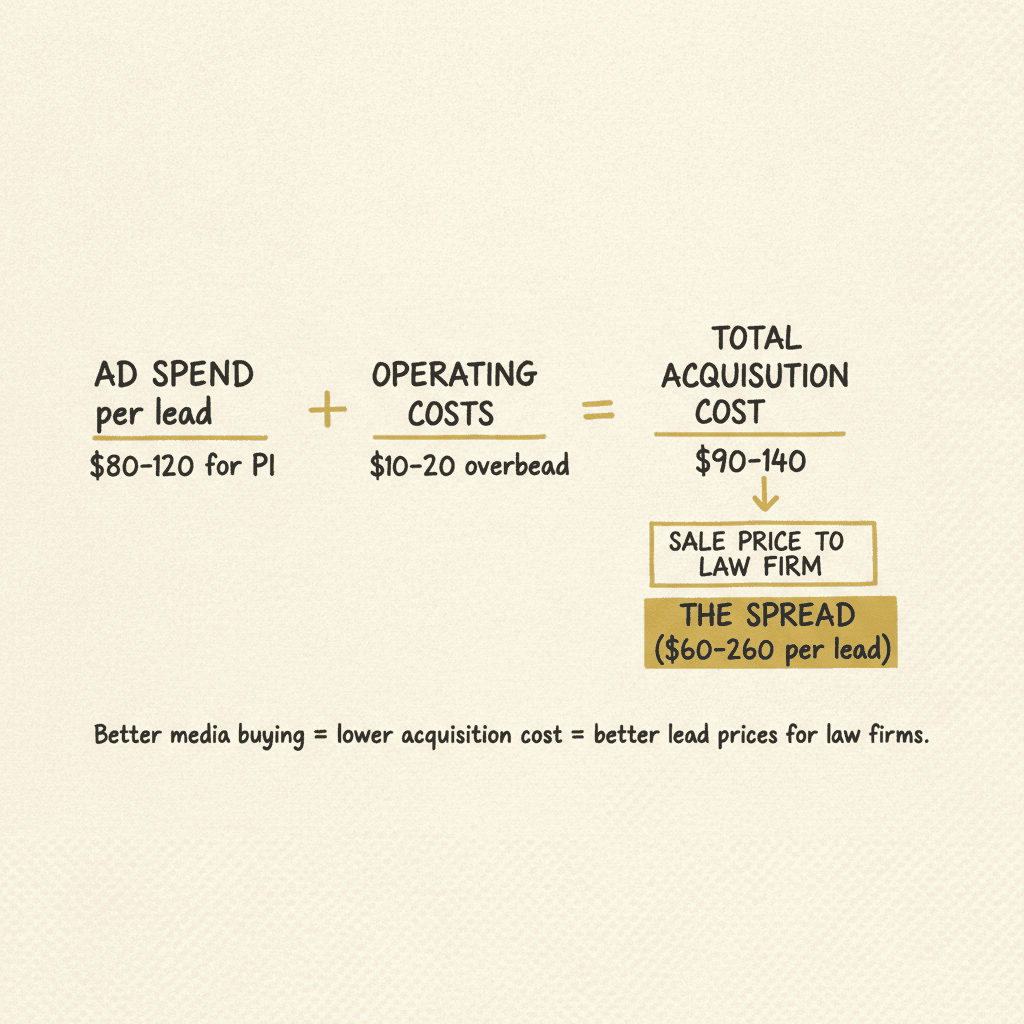
- A pay per lead marketing agency makes money on the spread between what it costs to acquire a lead and what a law firm pays for it — understanding this helps you negotiate better.
- The agencies that deliver the best PI leads consistently win by acquiring leads at lower cost through expert media buying, not by cutting corners on lead quality.
- Conversion rate optimization on the agency's landing pages directly determines lead quality — a 3% conversion rate versus 1% means the agency is attracting three times more intent-qualified claimants per ad dollar.
- Volume buyers who take 50 to 200 PI leads per month get priority treatment from PPL agencies because they are worth more to the system — higher volume equals more stable delivery.
- Real-time delivery and live profitability tracking separate serious PPL agencies from lead resellers who sell the same contact to multiple firms.
Most personal injury law firms think about pay per lead from only one side: what they pay and what they get. Understanding how a PPL agency actually makes money changes the way you evaluate providers, negotiate contracts, and judge lead quality. When you understand the economics on the other side of the table, you stop getting sold on lead volume and start asking the questions that actually predict whether the leads will become signed cases.
The Big Lie About PPL Lead Generation
The common misconception about a pay per lead marketing agency is that the model is straightforward: buy traffic, collect forms, deliver leads, collect payment. In reality, the execution requires mastering three distinct operational pillars. Two agencies can deliver the exact same lead at the same price and have completely different quality levels. The difference comes back to these fundamentals.
Two PI firms can buy from the same PPL agency and get radically different results not because the leads are different, but because their intake processes are different. Lead quality and intake speed are both variables — but when you understand how the agency generates the lead, you can also predict which agency is more likely to deliver claimants who actually convert.
Pillar 1: Media Buying — Where Lead Quality Starts
The agency's media buying operation is the origin of every lead you pay for. A PPL agency running Facebook and Google Ads to generate personal injury leads is making creative, targeting, and bidding decisions every day that determine whether the claimant who submits the form is a serious accident victim or someone who clicked on something they found interesting.
Expert PI media buying means running accident-specific creative that filters for genuine claimants from the first impression. An ad that opens with "Were you recently injured in a car accident?" attracts different people than a generic "Free legal consultation" banner. The creative specificity reduces click-through volume but increases the quality of who submits a form, which directly raises the agency's conversion rate and, consequently, your lead quality.
The agencies that deliver the best PI leads are the ones who can acquire them cheaper than anyone else. If one agency generates a qualified MVA lead for $90 while another spends $140 for the same lead type, the first agency either has a healthier margin or can pass the savings through in lower lead prices. Working with a personal injury law firm marketing agency that has spent years running PI campaigns means you are benefiting from a pixel trained on thousands of MVA and slip and fall conversions, not a generalist agency running their first legal campaign.
Pillar 2: Conversion Rate Optimization — The Silent Multiplier
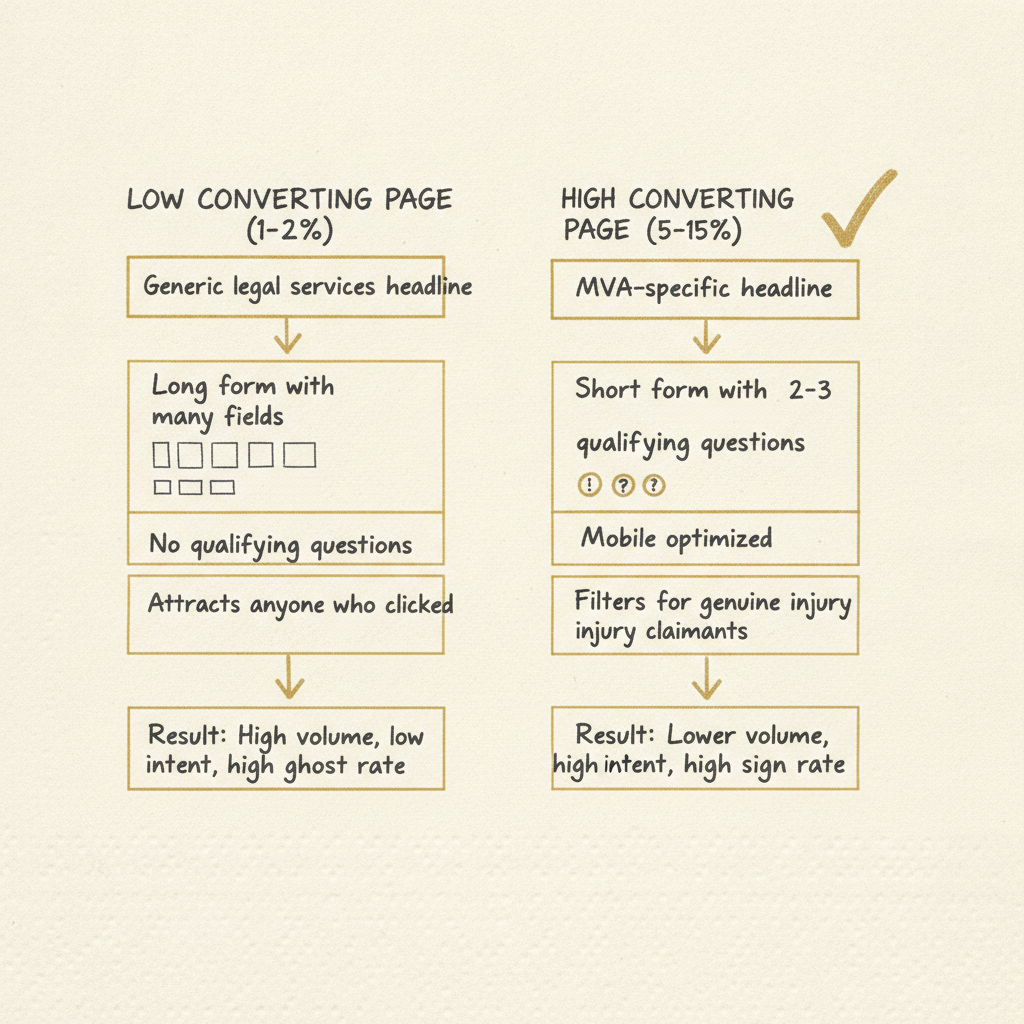
CRO is what separates PPL agencies that deliver volume from ones that deliver quality. After the ad drives a click, the landing page determines whether that click becomes an actual case inquiry. A page converting at 1% means 99 out of 100 people who clicked on a PI ad left without submitting. A page converting at 3% triples the output without spending another dollar on ads.
For law firms buying PI leads, this matters because conversion rate optimization determines the intent level of the claimants reaching the form. A landing page with a strong headline specific to MVA cases, a clear explanation of the free consultation, two to three qualifying questions, and a mobile-optimized form layout attracts and retains serious claimants. A generic legal services page with a long, friction-heavy form attracts whoever is willing to wade through it — which is not a reliable proxy for case intent.
Ask your PPL provider what their average landing page conversion rate is for PI traffic. Healthy PI-specific landing pages typically convert between 5% and 15% of clicks. Rates below 3% suggest the landing page is generic or not properly optimized for legal intent, which means you are paying for leads from a pool of people who were not specifically seeking legal help after an accident.
Pillar 3: Volume Buyers and Delivery Consistency
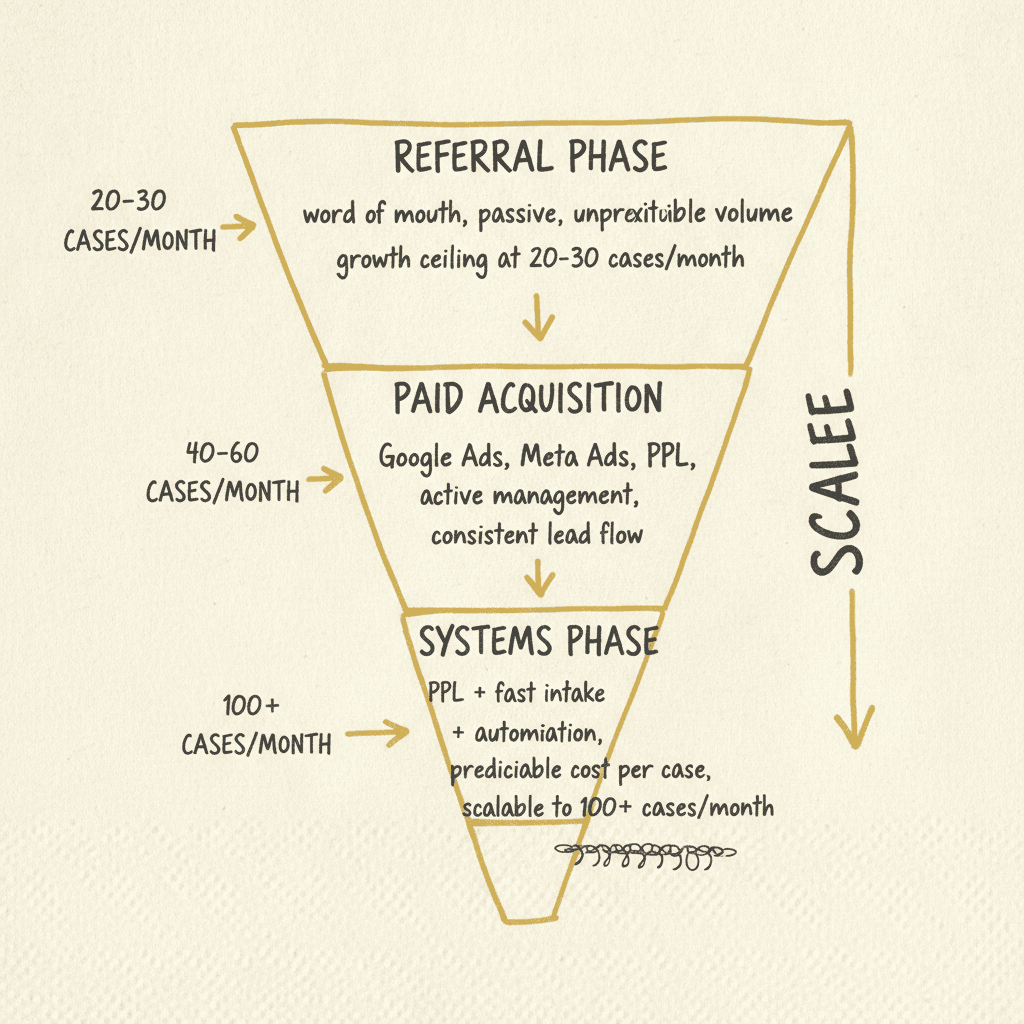
On the agency side, the economics improve significantly when a law firm buys a consistent high volume of leads each month. A firm that commits to 100 PI leads per month is worth more to the agency than 10 firms buying 10 leads each. That economics reality translates directly to better delivery consistency for high-volume buyers.
From the law firm's perspective, this means committing to a volume level your intake team can actually handle changes your relationship with the agency. You stop being a marginal buyer who gets leftover leads and start being a priority account that gets leads first. For PI firms with established intake teams that can handle 50 to 200 leads per month, the volume commitment unlocks better lead pricing and more consistent delivery.
For firms just starting with a PPL agency, committing to a trial volume (25 to 50 leads) gives you enough data to evaluate conversion rates and cost per signed case without overextending your intake capacity. Scale up only after confirming that your intake process converts the leads at a rate that makes the economics work.
Real-Time Profitability Tracking: What You Should Demand
The best PPL agencies track their lead economics in real time and can share transparency on your delivery. They know their cost per lead by campaign, their conversion rate by landing page variant, and their lead delivery rate by geography and case type.
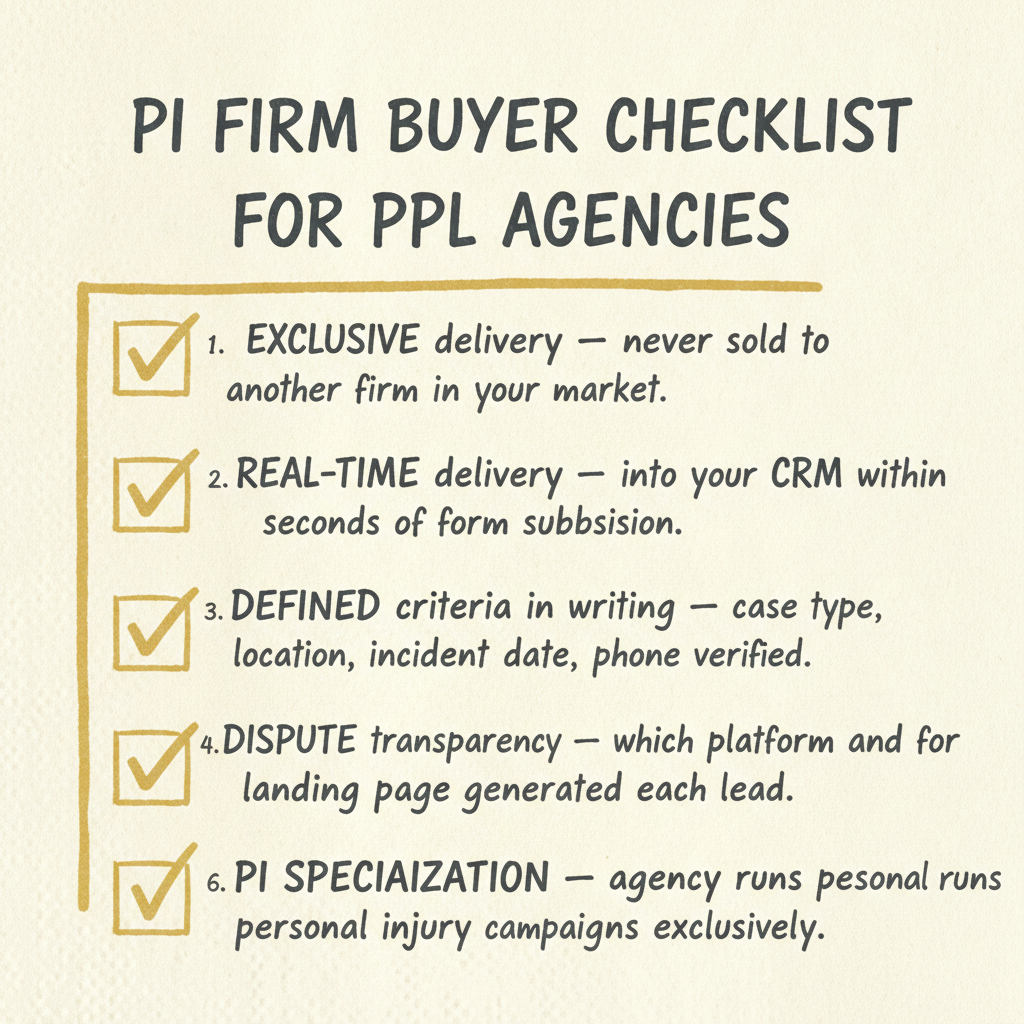
For law firms, this translates to a right to understand how your leads are being generated. Ask your PPL provider for their tracking setup: do they deliver leads in real time to your CRM? Do they have a dashboard showing how many leads were delivered, accepted, disputed, and why? Can they show you the source (Google Ads vs. Facebook) and the landing page that generated each lead?
Real-time delivery and source transparency separate serious personal injury lead generation companies from lead resellers who aggregate contacts from multiple low-quality sources and package them as exclusive PI leads. The agencies worth working with welcome this scrutiny because their operations can withstand it.
Conclusion
Understanding how a pay per lead marketing agency makes money changes how you evaluate providers and negotiate contracts. The best PPL agencies for personal injury firms are the ones with sophisticated media buying, high-converting PI-specific landing pages, and a delivery system that gets the lead to your intake team in seconds. These are not table stakes — they are the differentiators between a PPL agency that lowers your cost per signed case and one that delivers volume without results.
If you want to see how our pay per lead model for personal injury lawyers works and what economics to expect in your market, schedule a strategy call with our team. We will walk you through what real-time PI lead delivery looks like before you commit to anything.
Turn Ad Spend Into Signed Cases
We blend AI-driven testing with proven performance strategy to attract qualified traffic and turn it into revenue—fast, trackable, and scalable.
- PI Lead Generation — exclusive, AI-qualified leads across MVA, slip & fall, med mal, and more.
- Facebook & Instagram Ads — reach customers where they scroll.
- Google Ads — capture people actively searching for you.
- Website Design — turn visitors into buyers with high-converting sites.
- AI Automations — save hours and never miss a follow-up.
- Email Marketing — nurture leads and close sales on autopilot.
- SEO — get found by customers searching for what you sell.
FAQs

About the author
Rafael Hernandez
CEO and Co-Founder of Great Marketing AI
Rafael Hernandez is the Founder of Great Marketing AI and a former Microsoft Engineer. He specializes in performance marketing for personal injury law firms, managing over $10M in ad spend to help attorneys generate signed cases across every PI case type. His strategies focus on exclusive lead generation, AI-powered qualification, and eliminating wasted budget.
About Great Marketing AI
Great Marketing AI: Performance marketing for personal injury law firms
We help personal injury law firms scale with exclusive, AI-qualified leads across every PI case type: MVA, slip & fall, medical malpractice, and wrongful death. Native English and Spanish campaigns, enterprise-grade Meta + Google ad management, and AI lead qualification before every intake.
100% Exclusive Leads
Never shared between firms. Territory-protected.
Native Spanish & English Campaigns
Built by native speakers, not Google Translate.
AI Lead Qualification
Pre-qualified before they ever reach your intake team.