GEO for Personal Injury Law Firms: How to Get Recommended by ChatGPT, Perplexity and Google AI Overviews
A practical GEO for law firms playbook for personal injury firms, built on our own AI-citation audit of 26 prompts. Learn what ChatGPT and Perplexity cite.

Rafael Hernandez
CEO and Co-Founder of Great Marketing AI


I hope you find this useful. If you want our team to run your law firm's performance marketing, book a strategy call.
Author: Rafael Hernandez | CEO and Co-Founder of Great Marketing AI
Key Takeaways
- GEO for law firms (generative engine optimization) is the work of making ChatGPT, Perplexity and Google AI Overviews name and cite your firm. It builds on SEO, it does not replace it, and no one can guarantee a citation.
- In our own audit of 26 buyer prompts on 2026-10-20, Perplexity cited our site on 17 and ChatGPT on 9. Only 1 of ChatGPT's 18 unbranded answers cited us, which shows how hard category questions are to win.
- The changes with the best evidence are the plain ones: answer-first pages, real statistics, named expert attribution, inline citations to sources, and fresh content. The GEO research paper (KDD 2024) found keyword stuffing offered little to no improvement.
- Off-site signals matter as much as your website. In the 15 AI Overview answers we got back, YouTube was cited in 9 and Reddit in 6, so directories, reviews, video and forums are part of GEO.
- Measure AI visibility with a fixed prompt panel, Search Console and referral traffic, and check every analytics number against Search Console before you trust it.
GEO for law firms, short for generative engine optimization, is the work of getting ChatGPT, Perplexity and Google AI Overviews to name and cite your firm. For personal injury practices, it comes down to answer-first pages, sourced facts, consistent profiles on other sites, and crawlers that can reach you.
It sits on top of the foundation in our law firm SEO guide, and it does not replace it. One honest limit first: no one controls what an AI engine says, so GEO improves your odds and never guarantees a mention. This post shows what we measured on our own site, then the changes worth making and a 30-day checklist.
What GEO for Law Firms Is and Why PI Firms Feel It First
Personal injury is a high-stakes, high-cost-per-click field, and the people searching are often stressed and in a hurry. Many now type the question into a chat window instead of a search box: "do I need a lawyer after a rear-end collision?" or "how do I find an accident attorney who speaks Spanish?" The answer they get back often names a few firms, and the ones named get the call.
A generative engine builds that answer from sources it can reach and trusts. Your job is to be one of those sources, and to be described accurately when you are. That is the core of GEO for law firms: classic SEO decides whether your pages can be found, and GEO decides whether they get used in the answer. Our guide to how law firms can use AI for marketing covers the wider AI toolkit.
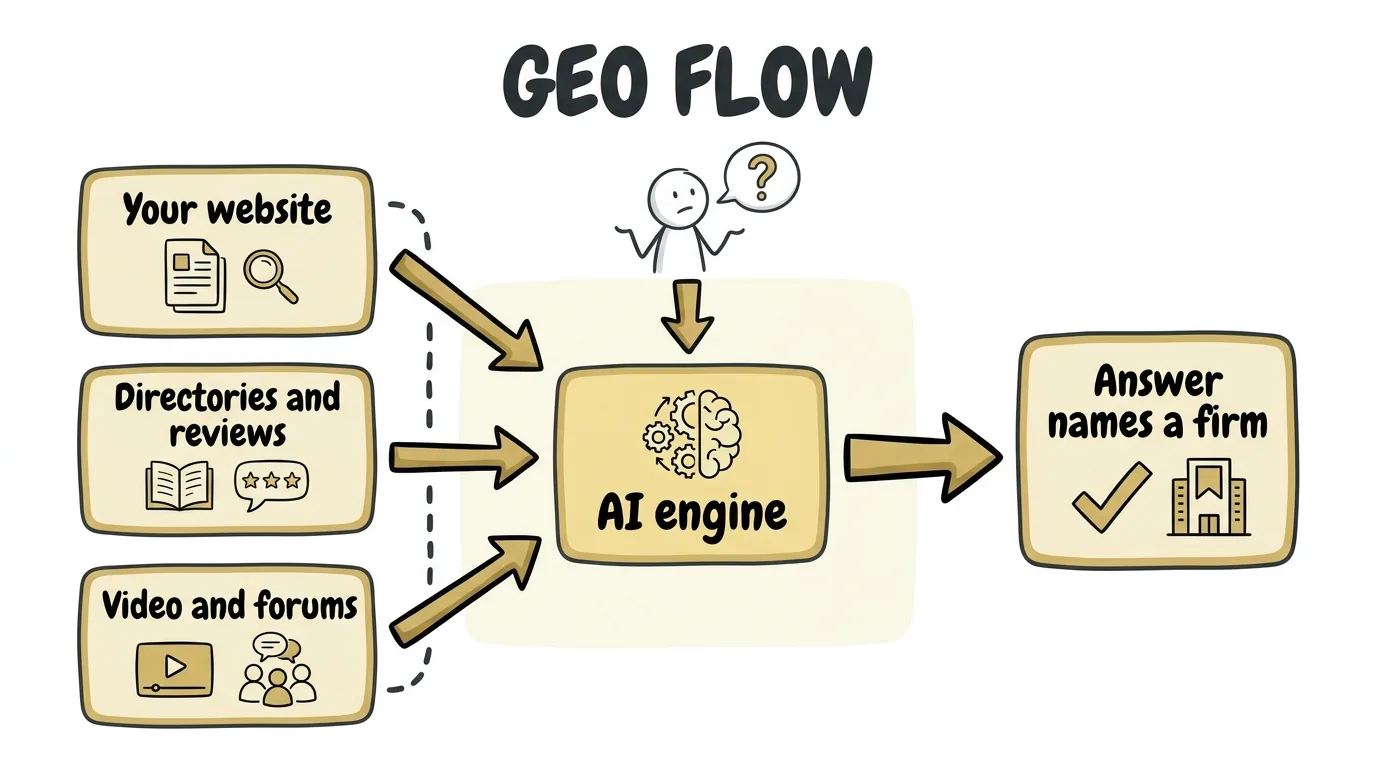
The research behind this is real but narrow. The research paper GEO: Generative Engine Optimization, accepted at KDD 2024, tested ways of rewriting content on a 10,000-query benchmark. Its abstract says GEO methods can boost visibility in generative engine responses by up to 40 percent. The best performers were adding quotations, adding statistics and citing sources. Keyword stuffing offered little to no improvement. The study used general web queries, not legal ones, so read it as a direction and not a forecast for your firm.
What AI Engines Cited in Our Own Audit
Most guides on this topic are generic lists. We can add measured data, with the limits stated up front.
Method. Every week we run a fixed set of 26 buyer prompts through three engines: ChatGPT, Perplexity and Google AI Overviews. We record whether our domain is cited. The latest run is dated 2026-10-20. Eight prompts name our brand ("Is Great Marketing AI legit?") and 18 do not ("Best Spanish-speaking personal injury lead generation service").
Conflict of interest. We sell marketing to personal injury firms, and the prompts are the questions a firm owner asks when shopping for an agency. The audited site is our own, not a law firm's. The lessons transfer, but the numbers describe us.
Data gap. Google AI Overviews returned a server error on 9 of the 26 prompts, so that engine answered 15. Treat its figures as partial and do not compare them with earlier runs. The comparable engines are ChatGPT and Perplexity.
| Engine | Prompts answered | Cited us | Unbranded (18 prompts) | Branded (8 prompts) |
|---|---|---|---|---|
| ChatGPT | 26 | 9 | 1 | 8 |
| Perplexity | 26 | 17 | 9 | 8 |
| Google AI Overviews | 15 | 5 | 2 of 11 answered | 3 of 6 answered |
Across all three engines, the audit scored us 100 percent on branded prompts and 52 percent on unbranded ones (weighted). That gap is the story. When someone already knows your name, AI engines get you right. When someone asks a category question, you compete with every other firm and agency.
Three details stood out:
- Dedicated pages got cited. Perplexity's citations of our site on unbranded prompts were mostly posts that answer one specific question, such as a best-of list or a head-to-head comparison.
- Off-site sources dominated AI Overviews. In the 15 answers it returned, youtube.com was cited in 9 and reddit.com in 6.
- One competitor domain showed up often. Rankings.io appeared in the results for 14 of the 26 prompts. We report that as a count from our snapshot, not as a verdict on anyone's work.
ChatGPT shared few source URLs (only 4 of its 26 answers listed any), so our ChatGPT counts rest more on mentions in the answer text than on link evidence.
The Seven Changes That Move Citations
These are the changes with the best support, in the order we would do them.
1. Write answer-first pages. Put a direct answer of 20 to 70 words in the first paragraph, then expand it. If the page is about a statute of limitations or what to do after a crash, say it plainly before any history or sales copy.
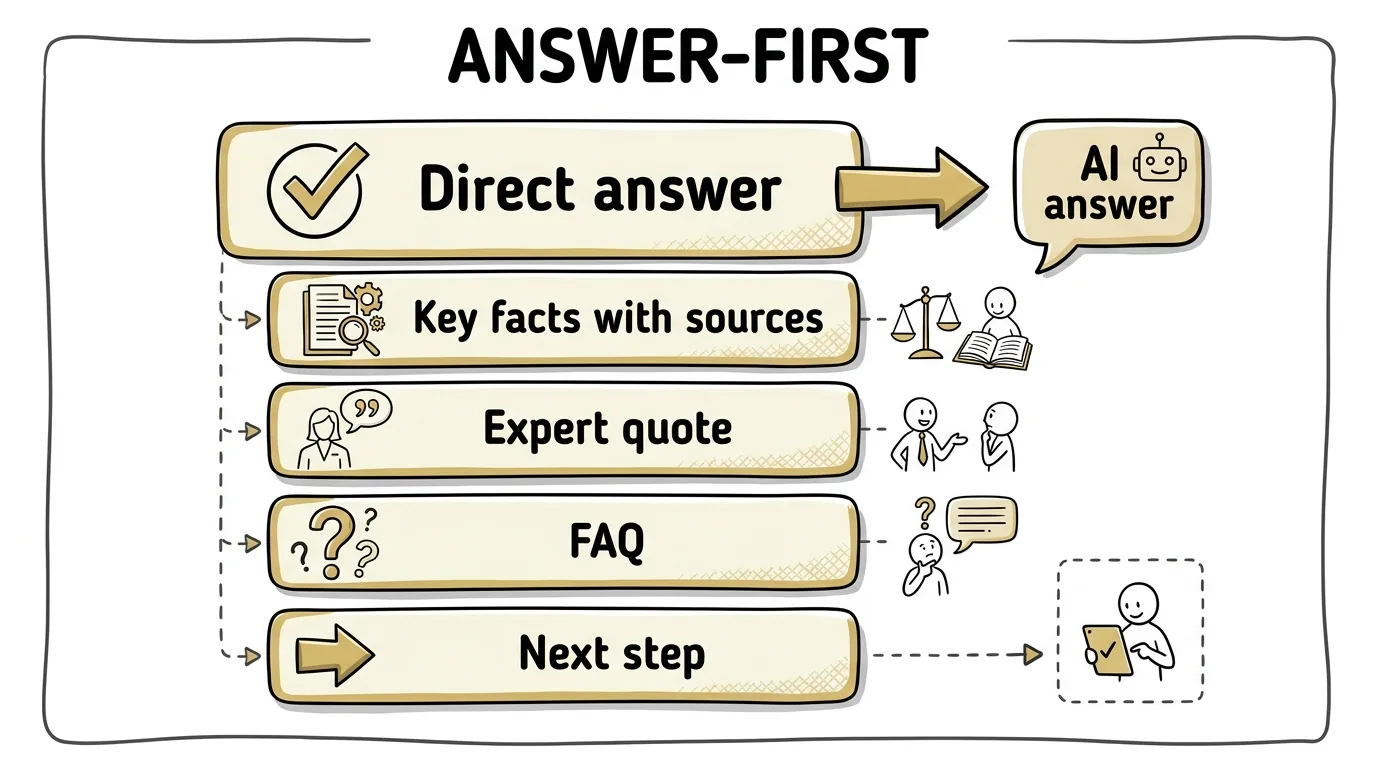
2. Add real statistics. A sourced number gives an engine something concrete to quote. Use figures you can link to, such as a state transportation department's crash data, and never invent one.
3. Attribute to named experts. A quote from a named attorney, with a title, shows experience. Quote only what the person actually said, and get their approval.
4. Cite sources inline. Link to the specific page behind a claim, not a homepage. The GEO paper listed citing sources among its top-performing methods.
5. Mark up FAQs and articles. Schema is structured data that labels what a page contains. Google says no special markup is needed for AI features, but it does say structured data should match the visible text on the page. Keep it accurate and cheap.
6. Keep pages fresh. Update a page when the law, a statute or a fee changes, and change the substance, not just the date.
7. Build mentions elsewhere. The next section covers this, and it is where most firms are weakest.
Mind your state bar's advertising rules on every claim about results. AI engines may quote you, so write as if every sentence will be read out of context.
Avoid four common mistakes. Do not stuff keywords, since the research found it does not help. Do not publish unreviewed AI-written pages, because an engine that quotes a wrong deadline puts your name on the error. Do not fake reviews or forum posts. And do not copy a competitor's page: a near duplicate gives an engine no reason to prefer yours. Good GEO for law firms is slower than those shortcuts, and it holds up.
Off-Site: Where AI Engines Look Beyond Your Website
Our audit shows engines lean on sources you do not own. For AI Overviews that meant video and forum threads. A firm with a strong site and no presence elsewhere gives an engine little to corroborate.
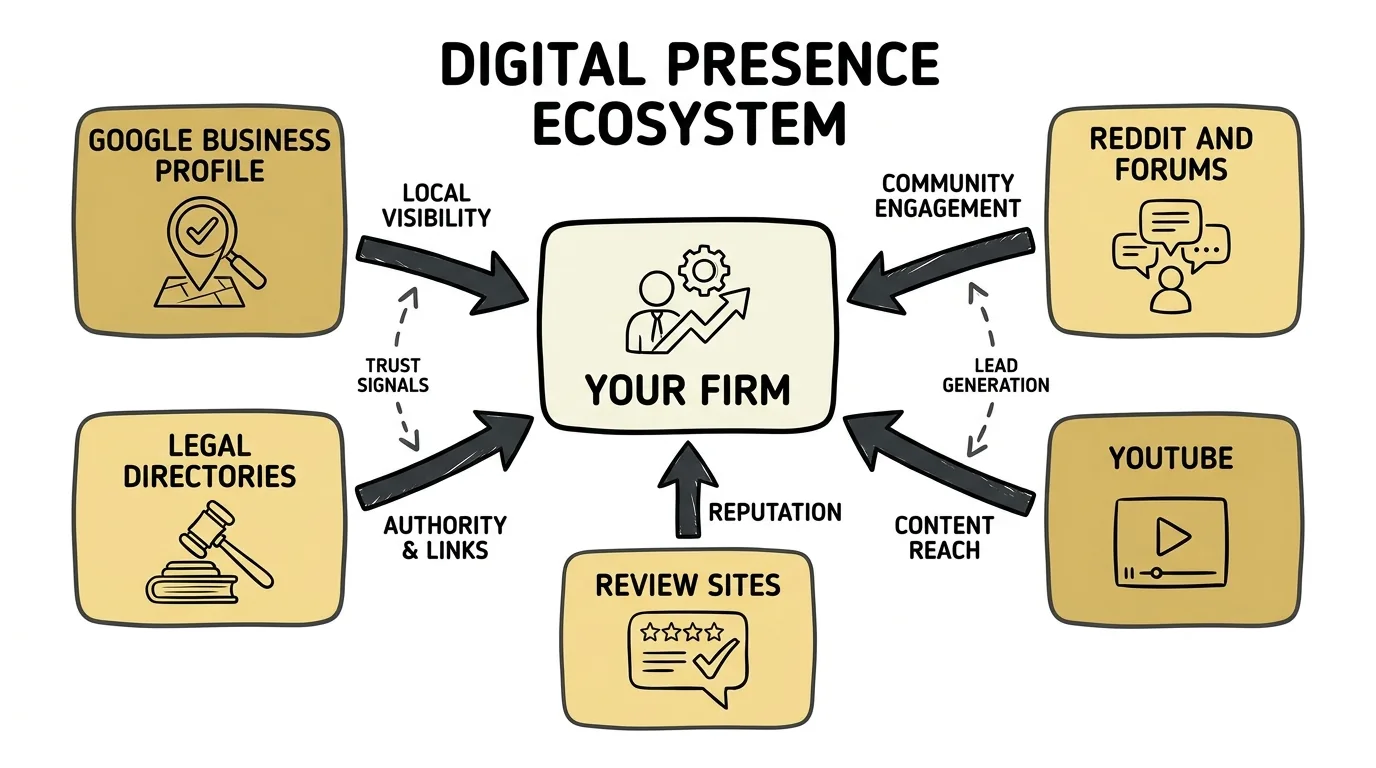
Start with these, in this order:
- Google Business Profile and local citations. Keep your name, address, phone and practice areas identical everywhere. Our guide to local SEO for lawyers covers the setup.
- Legal directories. Claim and complete your profiles on the directories that rank for your practice areas, such as Avvo, Martindale and Justia, and fix any outdated details.
- Reviews. Reviews feed both trust and the language engines use to describe you. See our notes on lawyer reputation management for how to ask without breaking platform rules.
- Video. Short, plain-language videos that answer one client question each give engines a second format to cite.
- Forums. Answer real questions honestly and disclose who you are. Do not post fake reviews or disguised ads. Both break platform rules and bar rules.
The same logic applies to bilingual work. If you serve Spanish-speaking clients, publish and list the Spanish pages and profiles too, so a Spanish-language question has a Spanish-language page to find.
Technical Basics: Crawlers, llms.txt, Schema and Indexing
Technical problems can quietly cancel good content. Four checks cover most of it.
Indexing first. Google states that a page must be indexed and eligible to appear in Search with a snippet to show up in AI Overviews or AI Mode, and that there are no additional requirements. Check your pages in Search Console before anything else. Read the full rules in Google's guidance on AI features.
Crawler access. OpenAI's crawler documentation describes three bots with different jobs. OAI-SearchBot surfaces sites in ChatGPT search features. GPTBot relates to training. ChatGPT-User visits pages when a person asks a question. Each robots.txt setting is independent, so you can allow search and still disallow training. Ask your developer to confirm you are not blocking search access by accident.
llms.txt. This is a plain text file listing your key pages for AI tools. Google's documentation says you do not need AI text files to appear in its AI features. We keep one on our own site because it costs almost nothing, but it is optional.
Speed and rendering. Pages should load fast and show their text in the HTML, not only after scripts run.
Measuring AI Visibility Without Fooling Yourself
You cannot manage what you do not measure, and AI visibility is easy to mismeasure.
- Build a fixed prompt panel. Write 15 to 25 prompts a client would type, in English and Spanish, with and without your firm's name. Run them in ChatGPT, Perplexity and Google every two weeks. Log whether you are cited, how you are described, and which rivals appear.
- Watch Search Console. Look for impressions on question-style queries. Eight AI-search queries about personal injury lawyers showed about 190 impressions on our own services page over 90 days with no clicks, which told us the audience was real but small.
- Track referral traffic, with care. Sessions from chatgpt.com or perplexity.ai are a useful signal, but analytics can mislead. Analytics tools count automated traffic that Search Console never records, and we have seen the gap between the two run to several times over on a site we operate. If analytics reports far more Google sessions than Search Console reports clicks, investigate before you celebrate.
- Write down errors. If an engine states a wrong fee, office or practice area, log it and fix the source it likely drew from.
A 30-Day GEO Checklist for a Personal Injury Firm
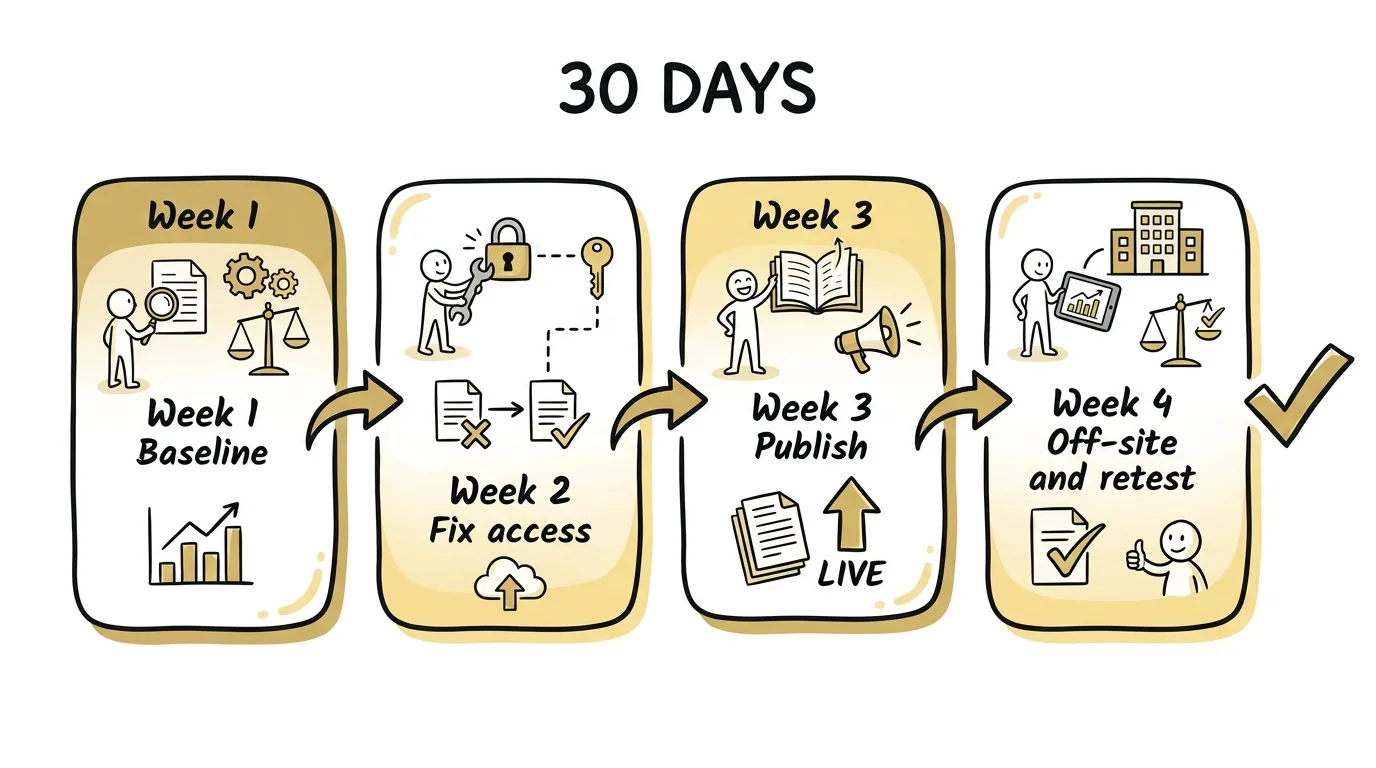
Week 1: Baseline.
- Write your 15 to 25 prompt panel and run it in all three engines.
- Save the results with dates.
- List the pages that answer your top five client questions.
Week 2: Fix access.
- Confirm your key pages are indexed in Search Console.
- Review robots.txt for search crawlers.
- Make sure the NAP (name, address, phone) matches everywhere.
Week 3: Publish and rewrite.
- Rewrite three pages with an answer-first opening, two sourced statistics and a named attorney quote.
- Add FAQ and Article schema that matches the visible text.
- Link the pages to each other and to your main practice area page.
Week 4: Off-site and retest.
- Complete your top two legal directory profiles.
- Publish one short video answering a client question.
- Rerun the panel and compare to week 1.
Where Great Marketing AI Fits
We are a law firm digital marketing agency that works only with personal injury firms, with a focus on Spanish-speaking motor vehicle accident cases. Our SEO for personal injury lawyers service covers AI search alongside classic rankings, and our broader guides on how law firms can use AI for marketing and the AI-powered legal marketing agency model show where it fits.
If you also buy cases through paid channels, our lead generation for lawyers model is built around signed cases, with visibility into the ads and funnel. We will not promise a citation. We will show you the baseline, the changes, and the retest, and you can book a call to see what that looks like for your market.
Turn Ad Spend Into Signed Cases
We blend AI-driven testing with proven performance strategy to attract qualified traffic and turn it into revenue—fast, trackable, and scalable.
- PI Lead Generation — exclusive, AI-qualified leads across MVA, slip & fall, med mal, and more.
- Facebook & Instagram Ads — reach customers where they scroll.
- Google Ads — capture people actively searching for you.
- Website Design — turn visitors into buyers with high-converting sites.
- AI Automations — save hours and never miss a follow-up.
- Email Marketing — nurture leads and close sales on autopilot.
- SEO — get found by customers searching for what you sell.
FAQs

About the author
Rafael Hernandez
CEO and Co-Founder of Great Marketing AI
Rafael Hernandez is the Founder of Great Marketing AI and a former Microsoft Engineer. He specializes in performance marketing for personal injury law firms, managing over $10M in ad spend to help attorneys generate signed cases across every PI case type. His strategies focus on exclusive lead generation, AI-powered qualification, and eliminating wasted budget.
About Great Marketing AI
Great Marketing AI: Performance marketing for personal injury law firms
We help personal injury law firms scale with exclusive, AI-qualified leads across every PI case type: MVA, slip & fall, medical malpractice, and wrongful death. Native English and Spanish campaigns, enterprise-grade Meta + Google ad management, and AI lead qualification before every intake.
100% Exclusive Leads
Never shared between firms. Territory-protected.
Native Spanish & English Campaigns
Built by native speakers, not Google Translate.
AI Lead Qualification
Pre-qualified before they ever reach your intake team.