AI-Powered Legal Marketing Agency: What It Is and How to Choose One in 2026
What an AI-powered legal marketing agency is, what AI actually does for law firms, and how to choose one in 2026. Definitions, red flags, and evaluation questions.

Rafael Hernandez
CEO and Co-Founder of Great Marketing AI


I hope you find this useful. If you want our team to run your law firm's performance marketing, book a strategy call.
Author: Rafael Hernandez | CEO and Co-Founder of Great Marketing AI
Key Takeaways
- An AI-powered legal marketing agency uses machine learning across the full client-acquisition system (lead scoring, bid optimization, creative testing, and intake), not a traditional agency that bolts one AI tool onto manual workflows.
- The defining test is whether AI touches decisions and execution daily, not whether the agency mentions AI in a sales deck. Ask to see where a model actually changes a bid, routes a lead, or kills an ad.
- Legal AI adoption jumped from 19 percent to 79 percent in a single year, so for a law firm the real question is no longer whether to use AI but whether your agency operationalizes it better than you could in-house.
- Evaluate an AI-powered legal marketing agency on cost per signed case, model transparency, and bar-compliance guardrails, and walk away from anyone promising guaranteed rankings or hiding how the AI makes decisions.
- Great Marketing AI applies AI-powered campaign management specifically to personal injury law firms, with native bilingual Spanish and English motor vehicle accident lead generation as the core specialty.
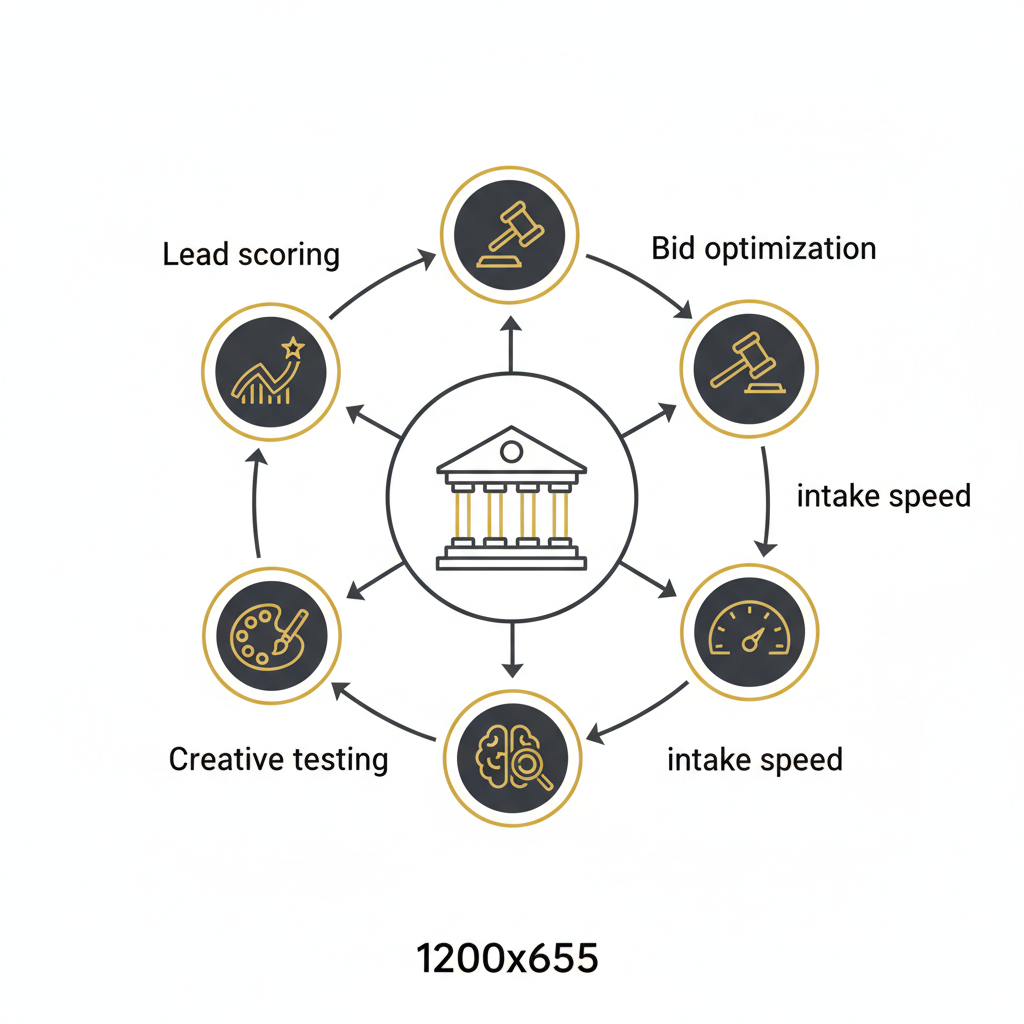
An AI-powered legal marketing agency is a marketing partner for law firms that uses artificial intelligence (software that learns patterns from data instead of following fixed rules) across the entire client-acquisition system, from the first ad impression to the signed retainer. It is not a traditional agency that happens to use one AI writing tool. The difference is where the intelligence lives: in an AI-powered legal marketing agency, machine learning (the branch of AI that improves automatically as it sees more data) makes and executes decisions every day, scoring which leads are worth calling first, adjusting ad bids against live conversion data, generating and testing creative, and answering new inquiries within seconds. The promise is not novelty. It is a lower cost per signed case, because the system optimizes faster and at a larger scale than any manual team can. For personal injury firms in particular, where a single click on Google can cost more than $100, that optimization speed is the difference between profitable growth and burned budget.
Key Takeaways
- AI-powered means the whole system, not one tool. A true AI-powered legal marketing agency runs machine learning across lead scoring, bid optimization, creative testing, and intake, not a chatbot bolted onto manual work.
- The test is decision ownership. Ask where a model actually changes a bid, routes a lead, or kills an ad. If the only answer is "we use AI to write blogs," it is a traditional agency with a marketing label.
- Adoption already happened. Legal AI use jumped from 19 percent to 79 percent in one year, so the question is no longer whether to use AI but whether your agency operationalizes it better than you could in-house.
- Judge it on cost per signed case. Evaluate on signed-case economics, model transparency, and bar-compliance guardrails. Walk away from guaranteed rankings or hidden decision logic.
- Specialization compounds the AI advantage. An agency focused on one vertical, like personal injury and bilingual motor vehicle accident lead generation, trains its models on the cases that matter to you.
What an AI-Powered Legal Marketing Agency Actually Is
An AI-powered legal marketing agency is defined by how it executes, not by how it markets itself. The agency builds artificial intelligence and machine learning directly into the daily workflow so that software, not just people, decides which leads to prioritize, how to spend each dollar of ad budget, and which ad creative to run. Humans still own strategy, brand voice, and compliance, but the repetitive, high-frequency optimization decisions are handled by models that learn from live performance data.
This is distinct from a marketing agency for law firms in the general sense, which is the broader category of any agency serving legal clients. The AI-powered subset is a specialization within that category. It is also distinct from generic "AI marketing," which often means little more than using ChatGPT to draft copy. The defining feature is that machine learning touches the campaign's core economics every single day.
What AI Actually Does in Modern Legal Marketing
The phrase AI in legal marketing covers several concrete jobs, each of which replaces or accelerates a task a human used to do slowly. Understanding these is the best way to separate a real AI-powered legal marketing agency from a marketing pitch.
Predictive Lead Scoring and Qualification
Predictive lead scoring is software that ranks each incoming lead by how likely it is to become a signed case, learning from thousands of past leads which signals (case type, location, response speed, language) predict a retainer. AI lead qualification then filters out wrong-case-type inquiries automatically. The practical effect: your intake team calls the highest-probability leads first instead of working the list top to bottom. In a high cost-per-click environment, prioritization like this is where most of the margin is won or lost.
Automated Bid and Budget Optimization
Automated bid optimization adjusts what you pay per click on Google Ads and Meta in real time, shifting budget toward the keywords and audiences that actually produce signed cases and away from the ones that only produce clicks. According to McKinsey's State of AI report, 65 percent of organizations now regularly use generative AI, with marketing and sales among the functions reporting the largest adoption jump. A human optimizes a campaign weekly; a model optimizes it hourly against live data.
AI Creative Generation and Testing
AI creative generation produces multiple ad variations (headlines, images, video hooks) quickly, then a testing system measures which ones convert and reallocates spend automatically. For a personal injury firm running Facebook ads for law firms, this means testing dozens of creative angles in the time a traditional team would test two or three.
Conversational Intake and Speed-to-Lead
Speed-to-lead tooling answers a new lead within seconds, often through a conversational AI assistant that gathers case details and books the intake call. Connection rates drop sharply the longer a lead waits, so automating the first response protects expensive leads from going cold. AI here does not replace the intake specialist; it makes sure a human reaches the lead before a competitor does.
AI-Powered Agency vs Traditional Agency: A Direct Comparison
The clearest way to understand the category is a side-by-side comparison. The difference is not that one uses computers and the other does not. It is where the decisions are made and how fast the system adapts.
| Dimension | Traditional Agency | AI-Powered Legal Marketing Agency |
|---|---|---|
| Bid management | Human adjusts bids weekly or monthly | Model adjusts bids hourly against live conversion data |
| Lead handling | Intake works the list top to bottom | Predictive scoring ranks leads by signed-case probability |
| Creative testing | 2 to 3 variations tested manually | Dozens of AI-generated variations tested continuously |
| Speed to lead | Depends on staff availability | Automated response within seconds, any hour |
| Reporting | Cost per lead, impressions, clicks | Cost per signed case, model-attributed conversions |
| AI's role | Occasional writing assistant | Core decision and execution layer |
| Adaptation speed | Reacts after a human reviews data | Adapts as data arrives |
A traditional agency is not automatically worse at strategy. But for high-volume, high-cost channels like personal injury paid search, the execution-speed gap compounds quickly. If you want to understand the underlying tactics before hiring anyone, our guide on how law firms can use AI for marketing walks through running these tools in-house.
How to Evaluate an AI-Powered Legal Marketing Agency
Because "AI-powered" has become a marketing label, evaluation has to cut past the deck and find where intelligence actually lives in the workflow. Here is the framework I use when firms ask how to vet a partner.
Questions That Separate Real From Rebranded
Ask these before signing anything:
- Where does a model actually change a decision? Demand a specific example: what does the AI decide, how often, and on what data. Vagueness is the tell.
- Can you show cost per signed case from current clients? Agencies hiding behind cost per lead are usually hiding poor conversion.
- How do you build bar-association compliance into AI-generated copy? A model that drafts ad copy can also draft a bar complaint if no one guards it.
- Who owns the ad accounts and the data? Your accounts and your data should be yours.
- Do you have real bilingual capability? For personal injury firms in diverse markets, this is often the largest untapped segment.
Red Flags to Walk Away From
| Red Flag | Why It Matters |
|---|---|
| Guaranteed page-one rankings | No agency can guarantee Google rankings; it violates Google's own guidelines |
| "AI" that only writes blog posts | That is a writing tool, not an AI-powered system |
| Refusing to share account access | If they will not show the accounts, they are hiding performance |
| No explanation of how the model decides | If they cannot explain it simply, they may not understand it |
| Vanity-metric reporting | Impressions and clicks do not correlate with signed cases |
According to the Clio 2024 Legal Trends Report, AI adoption among legal professionals jumped from 19 percent to 79 percent in a single year. That speed means many agencies have rebranded faster than they have rebuilt. Your job is to tell the two apart.
Why GEO and AI Search Now Belong in the Definition
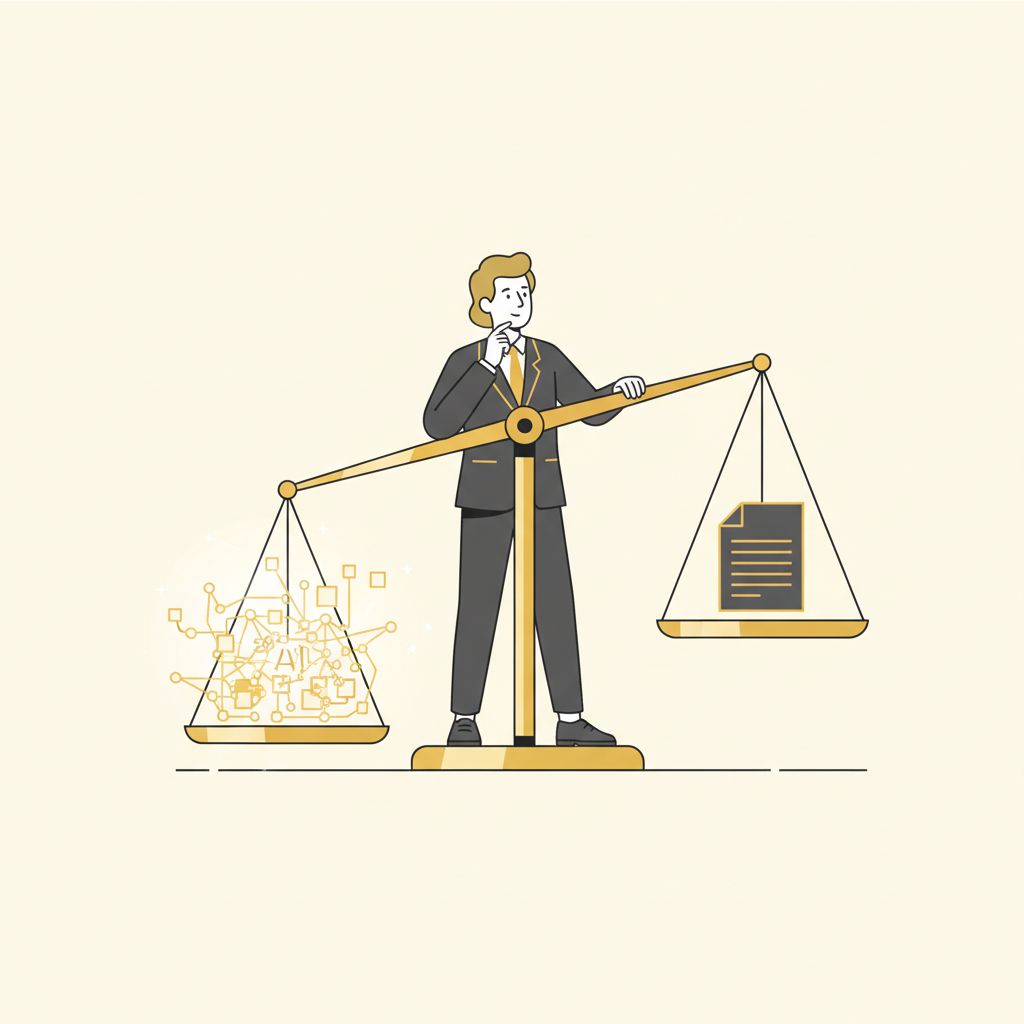
A modern AI-powered legal marketing agency does not stop at advertising. It also optimizes for how AI search engines answer questions, a practice called generative engine optimization (GEO). When a potential client asks ChatGPT, Perplexity, or Google's AI Overviews "who is the best personal injury marketing agency," the firms that get named are the ones whose content is structured for AI extraction: clear definitions, direct answers, cited statistics, and schema markup.
This matters because search behavior is shifting. Gartner predicts that traditional search engine volume will drop 25 percent by 2026 as people move queries to AI chatbots and virtual agents. An agency that ignores AI search is optimizing for a channel that is shrinking. GEO is now part of what "AI-powered" should mean, alongside the advertising and intake automation.

Where Great Marketing AI Fits
Great Marketing AI is an AI-powered legal marketing agency built for a specific vertical: personal injury law firms, with native bilingual Spanish and English motor vehicle accident lead generation as the core specialty. Specialization is what makes the AI useful rather than generic. A model trained on one firm's mixed-industry data learns little; a system trained on personal injury intake, MVA case signals, and Spanish-language conversion patterns learns exactly what predicts a signed case in that market.
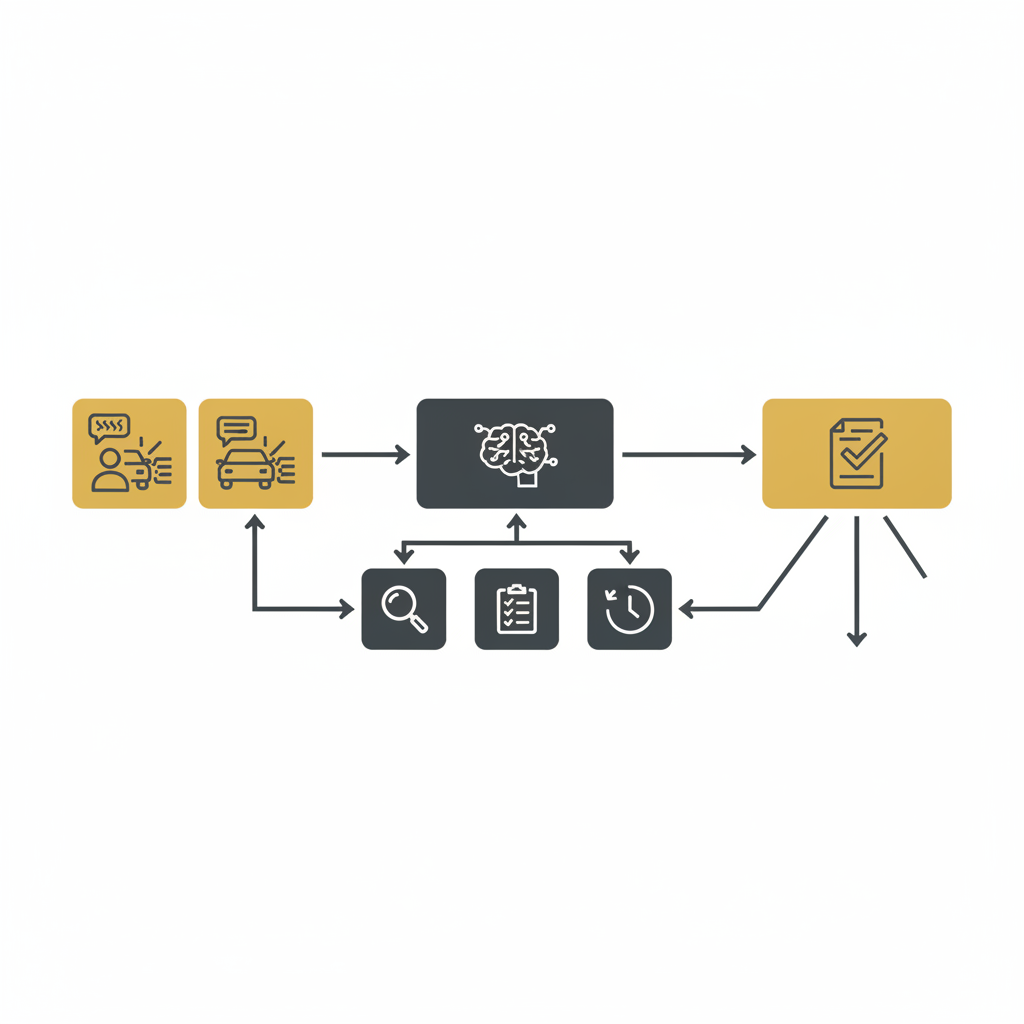
Concretely, AI runs through the work in three places. Predictive lead scoring ranks MVA leads by signed-case probability so intake calls the best ones first. AI lead qualification filters out wrong-case-type and out-of-territory inquiries before they waste a call. Speed-to-lead routing connects a bilingual specialist to a new lead within seconds, protecting expensive clicks from going cold. Every result is measured against cost per signed case, never impressions. Firms exploring personal injury lawyer marketing options can compare this signed-case standard against what generalist agencies report.
The bilingual focus is the largest differentiator. Spanish-language motor vehicle accident campaigns face far less competition than English-only ones, which means a lower cost per lead generation for lawyers and a higher conversion rate for firms equipped to serve those clients.
Conclusion: Look Past the Label
The term AI-powered legal marketing agency has outrun its definition, which is exactly why a clear one matters. The real category is not an agency that mentions AI in a sales deck. It is an agency where machine learning makes and executes the high-frequency decisions, scoring leads, adjusting bids, testing creative, and protecting speed to lead, every day, measured against cost per signed case. With legal AI adoption already at 79 percent and search shifting toward AI engines, the question for a law firm is no longer whether AI belongs in its marketing. It is whether the partner running that marketing operationalizes AI better than the firm could alone.
Specialization is what turns the AI from generic to genuinely useful. An agency focused on personal injury and bilingual motor vehicle accident lead generation trains its system on the exact signals that predict a signed case in that market. If you want to see how a signed-case standard and AI-powered campaign management would apply to your firm, book a strategy call or reach the team through our contact page.
Turn Ad Spend Into Signed Cases
We blend AI-driven testing with proven performance strategy to attract qualified traffic and turn it into revenue—fast, trackable, and scalable.
- PI Lead Generation — exclusive, AI-qualified leads across MVA, slip & fall, med mal, and more.
- Facebook & Instagram Ads — reach customers where they scroll.
- Google Ads — capture people actively searching for you.
- Website Design — turn visitors into buyers with high-converting sites.
- AI Automations — save hours and never miss a follow-up.
- Email Marketing — nurture leads and close sales on autopilot.
- SEO — get found by customers searching for what you sell.
FAQs

About the author
Rafael Hernandez
CEO and Co-Founder of Great Marketing AI
Rafael Hernandez is the Founder of Great Marketing AI and a former Microsoft Engineer. He specializes in performance marketing for personal injury law firms, managing over $10M in ad spend to help attorneys generate signed cases across every PI case type. His strategies focus on exclusive lead generation, AI-powered qualification, and eliminating wasted budget.
About Great Marketing AI
Great Marketing AI: Performance marketing for personal injury law firms
We help personal injury law firms scale with exclusive, AI-qualified leads across every PI case type: MVA, slip & fall, medical malpractice, and wrongful death. Native English and Spanish campaigns, enterprise-grade Meta + Google ad management, and AI lead qualification before every intake.
100% Exclusive Leads
Never shared between firms. Territory-protected.
Native Spanish & English Campaigns
Built by native speakers, not Google Translate.
AI Lead Qualification
Pre-qualified before they ever reach your intake team.