Speed to Lead for Personal Injury Firms: How to Book More Client Consultations
Speed to lead decides how many personal injury consultations you book. Get the 5-minute response rule, the biggest booking leaks, and how to fix them fast.

Rafael Hernandez
CEO and Co-Founder of Great Marketing AI


I hope you find this useful. If you want our team to run your law firm's performance marketing, book a strategy call.
Author: Rafael Hernandez | CEO and Co-Founder of Great Marketing AI
Key Takeaways
- Speed to lead, the time between a lead submitting a form and your firm making contact, is the single biggest factor in how many personal injury consultations you actually book.
- A Harvard Business Review study found firms that respond within an hour are about 7 times more likely to have a meaningful conversation than those that wait longer, and the Lead Response Management Study found responding within 5 minutes makes a lead roughly 21 times more likely to qualify than waiting 30 minutes.
- Most personal injury firms lose consultations not from weak marketing but from slow, inconsistent follow-up, missed after-hours leads, and no bilingual coverage for Spanish-speaking claimants.
- A marketing agency raises your speed to lead with instant-response automation, AI lead qualification, and calendar booking that turns a form fill into a scheduled consultation before a competitor calls.
- For motor vehicle accident firms, bilingual intake is the highest-leverage fix, because a large share of injury claimants are Spanish-speaking and most firms answer in English only.
- Track three numbers to book more consultations: lead response time, lead-to-consultation rate, and consultation show rate.
Speed to lead is the time between a prospective client submitting a form and your firm making first contact, and for personal injury firms it is the single biggest lever for booking more client consultations. Injured claimants rarely wait; they fill out several forms and take the consultation with whoever calls back first. So if your response time is measured in hours while a competitor answers in minutes, you lose the consultation no matter how good your ads are. The fix is rarely more ad spend. It is faster, more consistent follow-up: instant response to every lead, qualification that respects the claimant's time, and a booked consultation on the first contact. Improve speed to lead and the same marketing budget produces more scheduled consultations and more signed cases.
In short: Book more personal injury consultations by responding to every lead within five minutes, following up consistently, covering after-hours and Spanish-speaking claimants, and booking the consultation on the first call instead of promising to call back.
Key Takeaways
- Speed to lead, the gap between a form fill and first contact, decides how many personal injury consultations you book.
- Responding within five minutes makes a lead far more likely to qualify than waiting 30 minutes, per the Lead Response Management Study.
- Most firms lose consultations to slow follow-up, after-hours gaps, and English-only intake, not weak marketing.
- A marketing agency lifts bookings with instant-response automation, AI lead qualification, and calendar scheduling.
- Bilingual intake is the highest-return consultation fix for motor vehicle accident firms.
What Speed to Lead Means for Personal Injury Firms
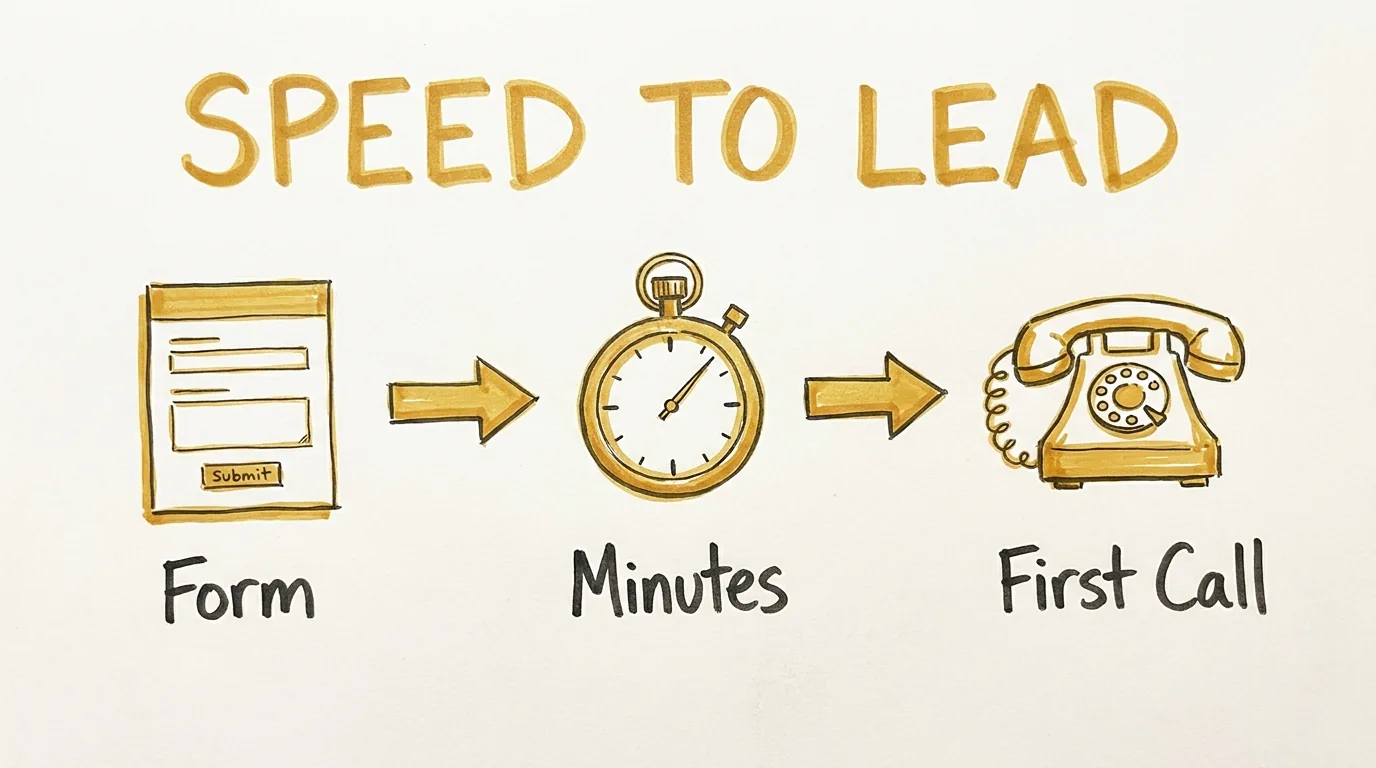
Speed to lead measures the elapsed time from the moment a prospective client submits an intake form or taps a call button to the moment your firm makes real first contact. It is a simple clock, and for personal injury firms it is the most under-managed number in the practice. Paid personal injury lawyer leads are expensive because injury cases are valuable, so every lead that goes cold is money burned. The claimant experience explains why timing matters so much: someone hurt in a crash is anxious, motivated, and comparison-shopping in the same hour, especially in high-demand markets like Los Angeles or Houston. They submit two or three forms, and the firm that responds first usually earns the consultation before the others even dial. That is why speed to lead, not ad volume, is the true bottleneck between marketing and booked consultations.
Why Response Time Decides How Many Consultations You Book
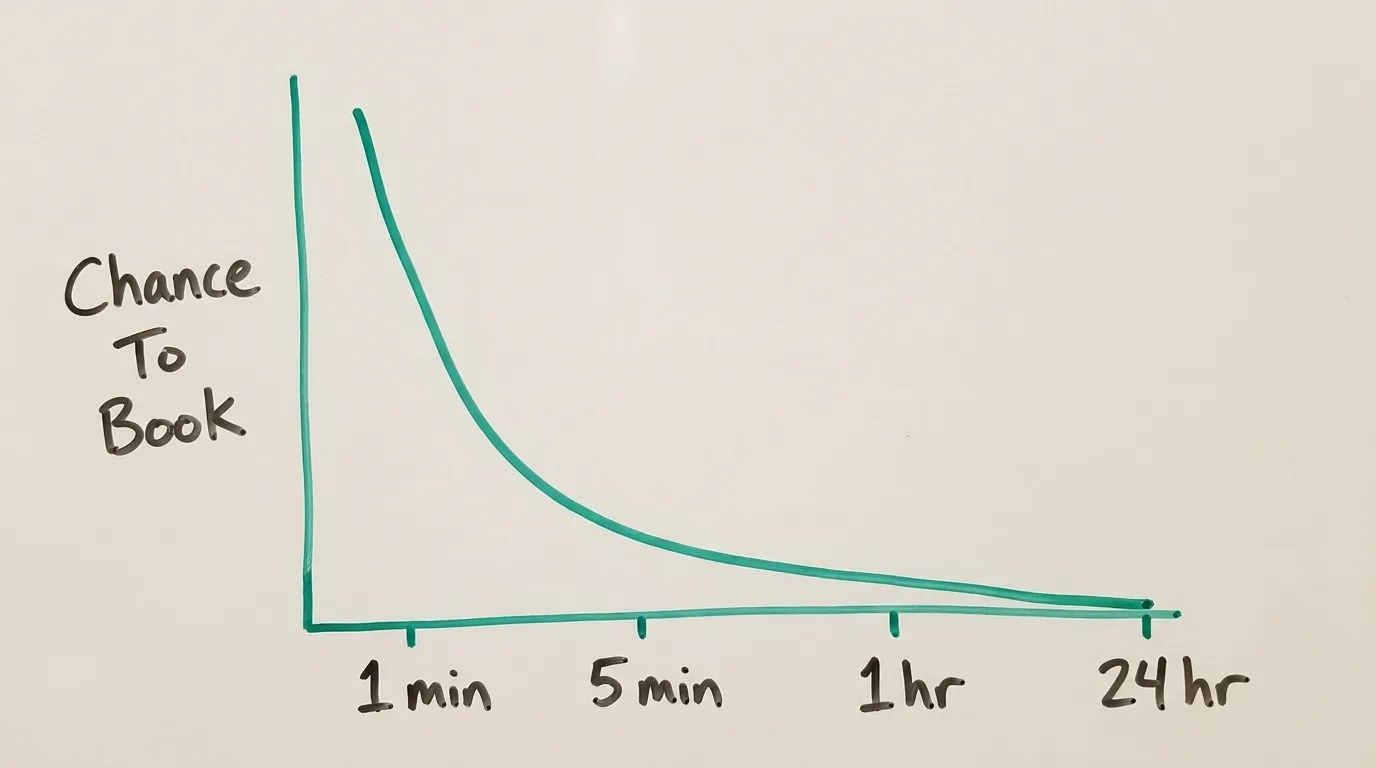
The data on response time is blunt. The Lead Response Management Study, led by Professor James Oldroyd, found that contacting a lead within five minutes makes it roughly 21 times more likely to qualify than waiting just 30 minutes. A Harvard Business Review analysis found firms that responded to online queries within an hour were far more likely to have a meaningful conversation than those that waited even 60 minutes longer. The window is short and it closes fast, which is why the five-minute mark is treated as the maximum acceptable response, not the target. The table below shows how the odds of booking a consultation collapse as minutes pass.
| First-contact time | Relative odds of booking the consultation | What is happening |
|---|---|---|
| Under 1 minute | Highest | You reach the claimant while intent is peak |
| Within 5 minutes | Strong | Still first to call; competitor lines are ringing |
| Within 1 hour | Reduced | Claimant may have already spoken to another firm |
| After 24 hours | Very low | Lead is cold or already signed elsewhere |
Where Personal Injury Firms Lose Booked Consultations
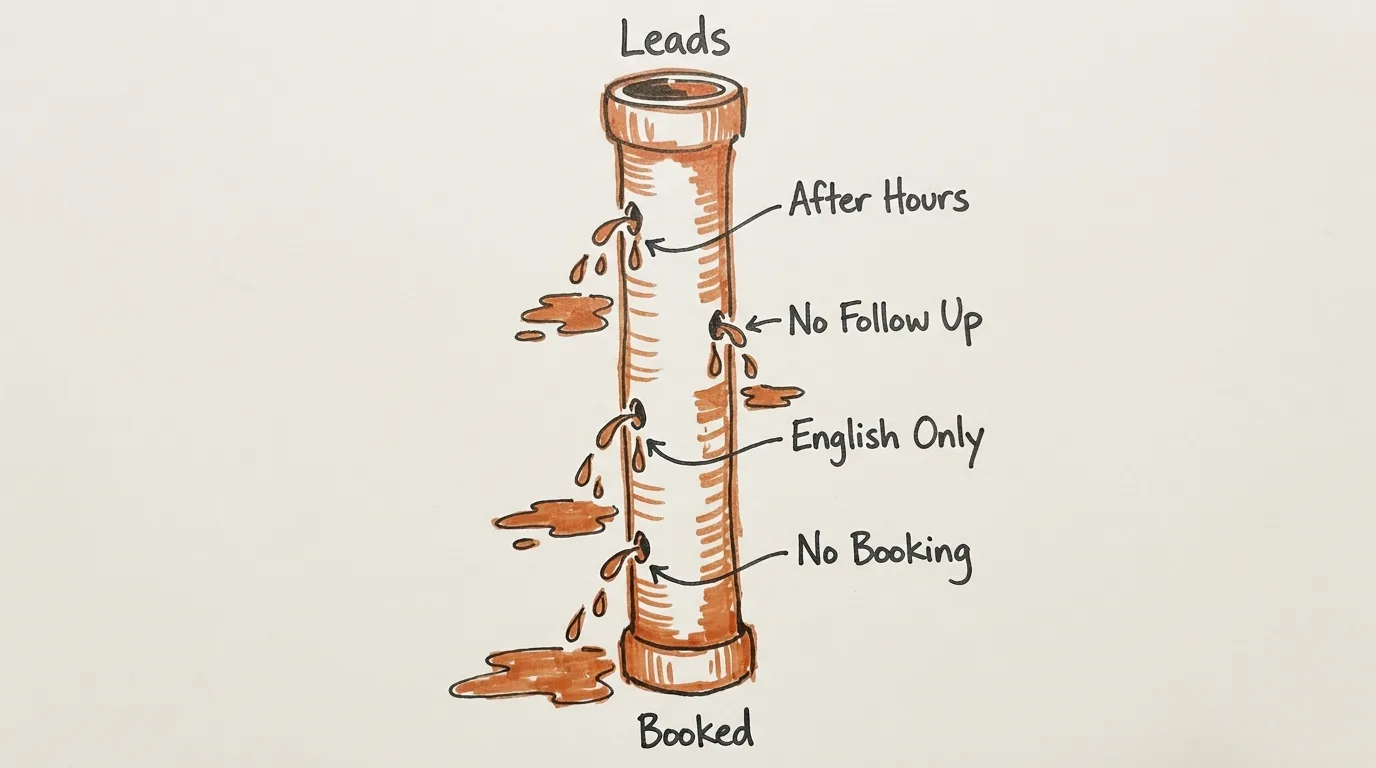
Most firms with a booking problem do not have a marketing problem; they have a leak between the lead and the calendar. The first leak is after-hours coverage: leads arrive at night and on weekends, and a voicemail loses them. The second is follow-up that stops too soon, when one unanswered call ends the pursuit instead of a structured sequence of calls and texts. The third is the language gap, where Spanish-speaking claimants reach an English-only line and hang up. The fourth, and most common, is failing to book on the first contact, promising to call back later instead of scheduling the consultation on the spot. Effective law firm client intake closes each leak deliberately, because every one of them wastes a lead the firm already paid to generate. This is also the fastest route to how to get more personal injury clients without raising the budget.
How a Marketing Agency Lifts Your Speed to Lead
The value of a specialist agency is that it treats speed to lead as infrastructure, not a hope. It wires instant-response automation to every lead source, whether the click came from Google Ads for personal injury lawyers or Facebook ads, so a form fill triggers a call, text, and email within seconds, day or night. It adds AI lead qualification that screens for case type and viability before a human picks up, so intake staff spend their minutes on claimants worth a consultation. It connects a calendar so the claimant books a time on the first contact rather than waiting for a callback, and it fires that outreach within TCPA limits so fast texts and calls to a new lead stay compliant. "Most firms think they need more leads," says Rafael Hernandez, Founder and CEO of Great Marketing AI. "They usually need to answer the leads they already have in ninety seconds instead of ninety minutes." Paired with qualified personal injury lawyer leads, that response layer is what turns marketing spend into booked consultations rather than missed calls.
Bilingual Intake: The Consultation Edge Most Firms Miss
For motor vehicle accident firms, the largest single source of missed consultations is language. A significant share of injury claimants are Spanish-speaking; the U.S. Census Bureau reports Spanish is by far the most common non-English language spoken in U.S. homes. Yet most firms staff intake in English only, so those leads hit a wall the moment they call. Adding Spanish-speaking intake and bilingual booking captures consultations that competitors never reach, and it usually does so at a lower cost per consultation because competition for Spanish-language response is far lower than for English. This is where paid Spanish motor vehicle accident leads and bilingual intake compound: cheaper, higher-intent leads meet a response the claimant can actually understand. A firm that pairs fast speed to lead with native bilingual coverage books consultations from demand its English-only competitors do not even see. That fast, bilingual response is exactly what a bilingual personal injury marketing agency is built to deliver.
A Five-Step System to Book More Personal Injury Consultations
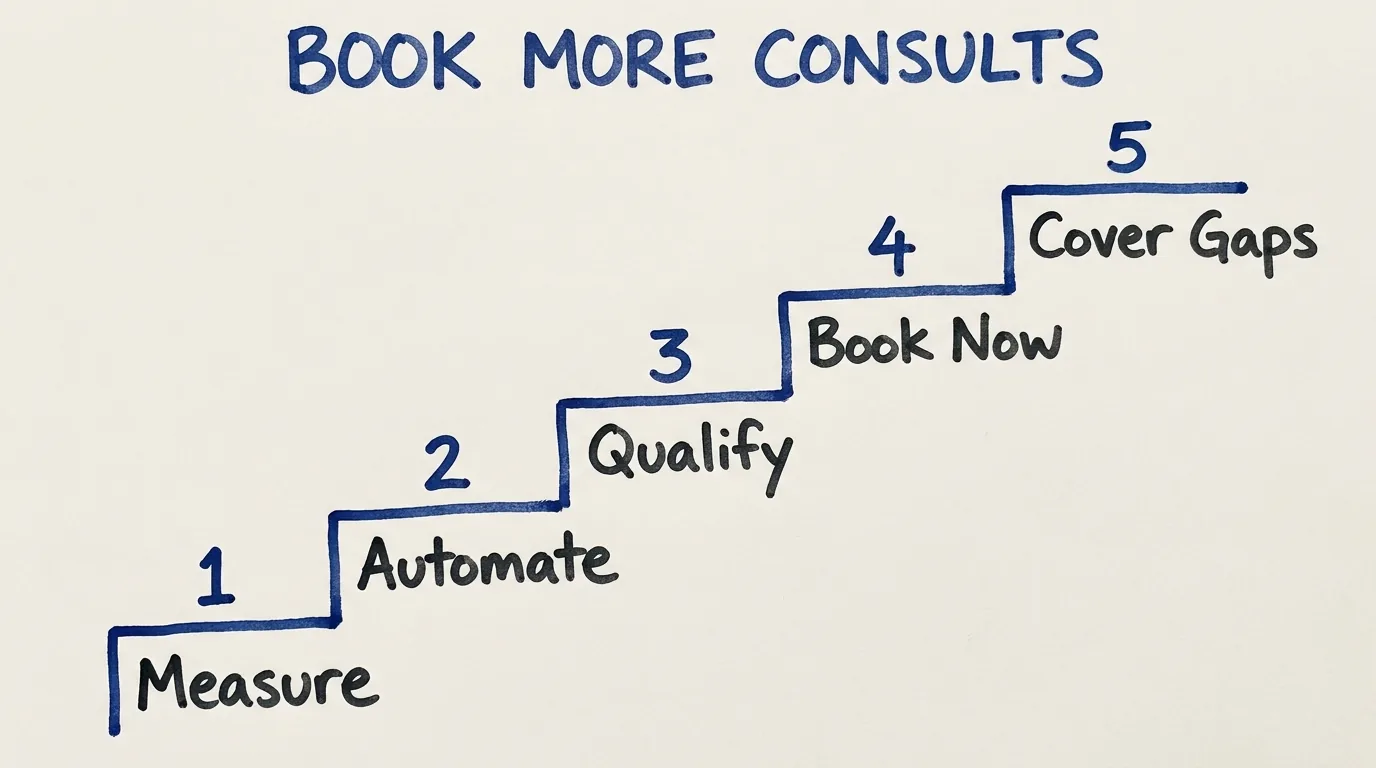
Turning leads into booked consultations is a system, not a personality trait of your best intake person. First, measure your real speed to lead today by timing form fill to first contact across a week; most firms are shocked. Second, automate instant response so every lead gets a call, text, and email within minutes without waiting on a human. Third, qualify fast, using a short script or AI to confirm case type before booking. Fourth, book on the first contact by offering two concrete consultation times, never a vague callback. Fifth, add after-hours and bilingual coverage so no lead is lost to a clock or a language. Firms that want a broader plan can pair this with our guide to law firm intake optimization, and those weighing outside help can book a call to see where their consultations are leaking.
The Three Numbers That Predict Booked Consultations
You cannot improve what you do not measure, and three numbers predict how many consultations a personal injury firm books. The first is lead response time, the raw clock from form fill to first contact; aim for under five minutes. The second is lead-to-consultation rate, the share of leads that become a scheduled consultation, which exposes weak follow-up and law firm client intake gaps far better than raw lead volume ever will. The third is consultation show rate, the share of booked consultations that actually happen, shaped by your reminder sequences and how well you qualified the claimant up front. According to the Clio Legal Trends Report, firms that measure intake and conversion outperform those that track activity alone. Tracked together, these numbers show where bookings leak and turn how to get more personal injury clients into a measurable process. That intake discipline is what a performance marketing agency for personal injury firms brings to the table, not just a managed ad account.
Conclusion
Marketing gets a personal injury firm the lead; speed to lead gets it the consultation. The firms that book the most consultations are rarely the ones spending the most on ads. They are the ones that answer within minutes, follow up consistently, cover after-hours and Spanish-speaking claimants, and schedule on the first call. Each of those fixes turns leads a firm already paid for into consultations on the calendar, which is the only place signed cases come from. A specialist personal injury law firm marketing agency builds that response layer for you, so paid leads convert instead of leaking. If your marketing is working but your consultation count is flat, the leak is almost certainly in response time, and it is the most profitable thing a firm can fix this quarter.
Turn Ad Spend Into Signed Cases
We blend AI-driven testing with proven performance strategy to attract qualified traffic and turn it into revenue—fast, trackable, and scalable.
- PI Lead Generation — exclusive, AI-qualified leads across MVA, slip & fall, med mal, and more.
- Facebook & Instagram Ads — reach customers where they scroll.
- Google Ads — capture people actively searching for you.
- Website Design — turn visitors into buyers with high-converting sites.
- AI Automations — save hours and never miss a follow-up.
- Email Marketing — nurture leads and close sales on autopilot.
- SEO — get found by customers searching for what you sell.
FAQs

About the author
Rafael Hernandez
CEO and Co-Founder of Great Marketing AI
Rafael Hernandez is the Founder of Great Marketing AI and a former Microsoft Engineer. He specializes in performance marketing for personal injury law firms, managing over $10M in ad spend to help attorneys generate signed cases across every PI case type. His strategies focus on exclusive lead generation, AI-powered qualification, and eliminating wasted budget.
About Great Marketing AI
Great Marketing AI: Performance marketing for personal injury law firms
We help personal injury law firms scale with exclusive, AI-qualified leads across every PI case type: MVA, slip & fall, medical malpractice, and wrongful death. Native English and Spanish campaigns, enterprise-grade Meta + Google ad management, and AI lead qualification before every intake.
100% Exclusive Leads
Never shared between firms. Territory-protected.
Native Spanish & English Campaigns
Built by native speakers, not Google Translate.
AI Lead Qualification
Pre-qualified before they ever reach your intake team.