Personal Injury SEO: How to Rank Your Practice and Get More Cases in 2026
Complete personal injury SEO guide. Master local SEO, technical optimization, content strategy, and backlinks to rank your law firm and sign more cases.

Rafael Hernandez
CEO and Co-Founder of Great Marketing AI


I hope you find this useful. If you want our team to run your law firm's performance marketing, book a strategy call.
Author: Rafael Hernandez | CEO and Co-Founder of Great Marketing AI
Key Takeaways
- Personal injury SEO is one of the highest-ROI long-term investments because organic leads have no ongoing media cost once content ranks.
- Local SEO drives the majority of personal injury case flow from organic search. Google Business Profile optimization is the single highest-leverage activity.
- Technical SEO failures kill rankings regardless of content quality. Page speed, mobile experience, and proper schema markup matter for every personal injury law firm.
- Topic cluster content strategies outrank scattered blog posts. Build pillar pages around your highest-value practice areas with supporting articles linked together.
- Backlink quality matters more than quantity. A handful of authoritative legal directory citations and earned editorial links outperform hundreds of low-quality links.
Personal injury SEO is one of the most valuable long-term investments a law firm can make. The leads it produces carry no ongoing media cost once content ranks, the rankings compound over time, and a single well-optimized practice area page can drive cases for years. This guide covers the four pillars of personal injury SEO that actually move rankings in 2026: local SEO, technical optimization, content strategy, and authority building.
Why Personal Injury SEO Drives Long-Term Case Flow
Most law firms approach marketing as monthly expense. Pay for Google Ads this month, receive leads this month, repeat. SEO works differently. The investment produces an asset that continues delivering returns long after the original work is complete.
A practice area page about car accidents in Los Angeles, properly optimized and earning quality backlinks, can rank on Google's first page for years. Each month that page generates leads costs nothing additional beyond the initial work to produce and promote it. The economics improve dramatically over time as more content compounds in the same way.
The challenge is the time horizon. Most personal injury SEO investments take six to twelve months to produce meaningful results, which is why so many firms abandon the channel prematurely. Firms that commit to multi-year SEO strategies build organic moats that competitors paying for clicks struggle to overcome.
The other consideration is intent quality. Someone searching "best personal injury attorney near me" is signaling stronger intent than someone scrolling Facebook. Search intent converts at higher rates than interruption-based advertising, which is why organic search leads typically have superior close rates compared to social media leads.
Local SEO and Google Business Profile Optimization
The fastest path to personal injury SEO results runs through local search rankings. The local pack that appears at the top of relevant queries receives disproportionate clicks compared to traditional organic results below, which makes local visibility the highest-leverage opportunity for most law firms.
Google Business Profile optimization is the single highest-leverage activity in personal injury local SEO. Most law firms have a Google Business Profile, but few have it optimized to compete for prominent local pack placement.
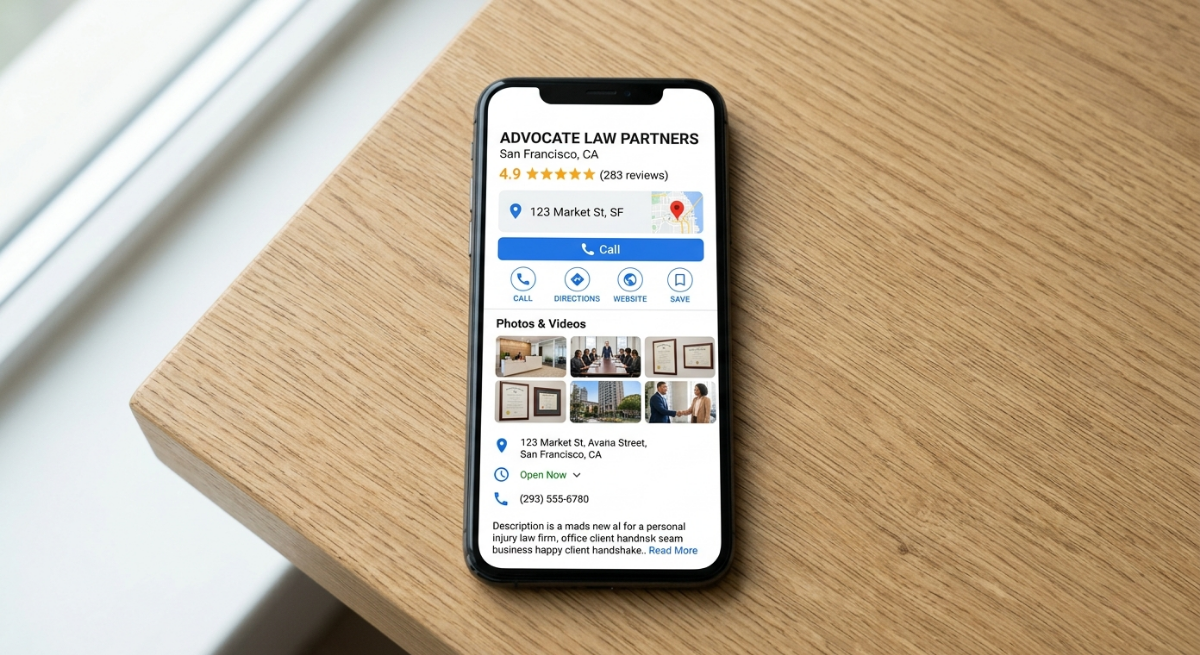
Complete every field in your Google Business Profile. The categories you select should include "Personal Injury Attorney" as primary plus relevant secondary categories like "Law Firm" and specific practice areas where Google offers them. Inconsistent or incomplete categorization keeps profiles from ranking for relevant queries.
Photos and posts maintain profile engagement signals. Upload high-quality photos of your office, attorneys, and team monthly. Use the Posts feature to publish case results with proper disclaimers, community involvement, and practice area updates. Google rewards active profiles with improved visibility in local search results.
Reviews drive both rankings and conversion. The number of reviews, the average rating, the recency of reviews, and the response rate from your firm all influence local rankings. Aim for at least 50 reviews on your Google Business Profile and respond to every review professionally, whether positive or negative. Specialized review acquisition tools can systematize this process for high-volume firms.
Local citations across legal directories reinforce your firm's local relevance signals. Avvo, Justia, FindLaw, Martindale-Hubbell, and Super Lawyers all contribute to citation authority when listings are complete and consistent with your Google Business Profile. Inconsistent name, address, or phone information across these platforms confuses search engines and dilutes ranking signals.
Technical SEO Foundations
Technical SEO failures kill rankings regardless of how good your content is. Google increasingly penalizes slow pages, poor mobile experiences, and sites with crawlability issues. Most law firm websites have significant technical problems that compound to limit ranking potential.
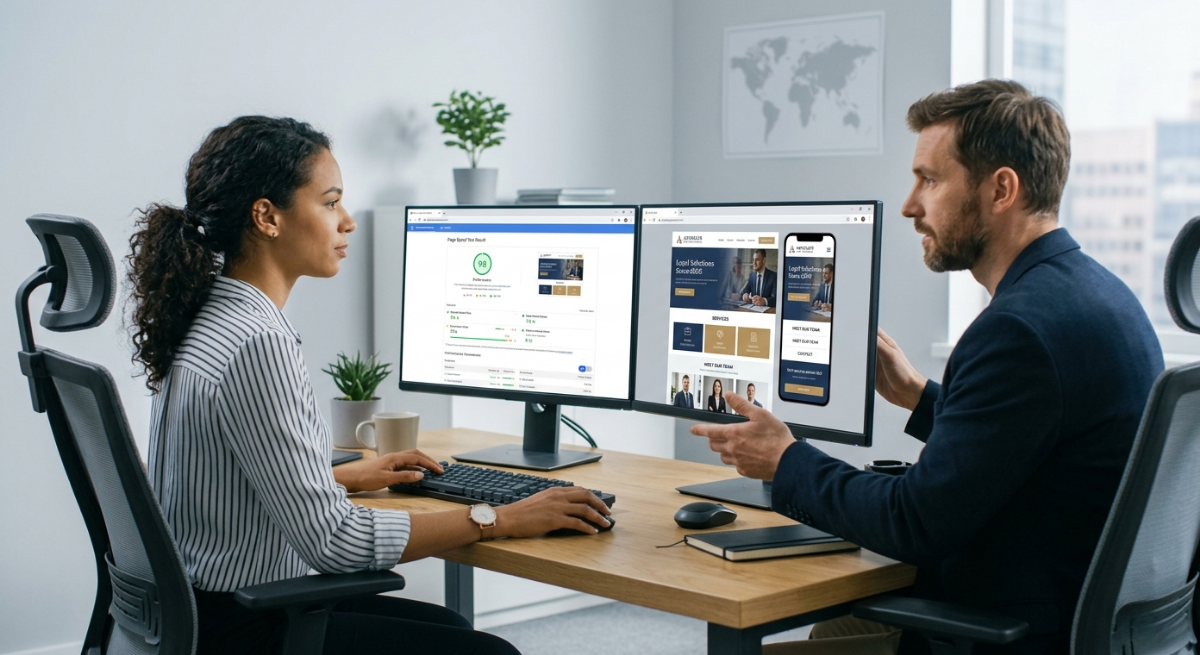
Page speed has become a critical ranking factor. Google's Core Web Vitals measure how quickly your pages load, how stable the layout is during loading, and how responsive the page feels to user interaction. Personal injury law firm websites with poor Core Web Vitals scores typically rank below faster competitors regardless of content quality.
Mobile experience matters even more than desktop because most personal injury searches happen on phones. Google has used mobile-first indexing for years, meaning your mobile site is what Google evaluates for rankings. Sites that work well on desktop but poorly on mobile lose rankings to mobile-optimized competitors.
Schema markup tells search engines what your pages mean rather than just what they say. Attorney schema, FAQPage schema, Review schema, and LocalBusiness schema all help Google understand your firm and content better. Pages with proper schema receive richer search result presentations including review stars, FAQ accordions, and prominent business information that improve click-through rates.
Crawlability issues prevent Google from indexing your pages properly. Common problems include broken internal links, missing XML sitemap, robots.txt files that block important pages, and duplicate content across multiple URLs. A technical SEO audit identifies these issues, and most can be fixed within a few weeks by a competent developer.
HTTPS, structured URLs, and proper canonical tags round out the technical foundation. These are basic requirements, but many older law firm websites still have gaps in these areas that quietly limit rankings.
Content Strategy and Topic Clusters
Scattered blog posts rarely rank well in 2026. Google rewards comprehensive content coverage of topics through interconnected pages rather than isolated articles. The topic cluster model has become the dominant content strategy for ranking competitive personal injury terms.

A topic cluster starts with a pillar page covering a broad topic comprehensively. For personal injury, this might be a comprehensive guide to car accident claims, a detailed resource on motorcycle accident litigation, or an authoritative page about workers compensation claims in your state.
Supporting articles then target specific subtopics that link back to the pillar page. The pillar page links out to relevant supporting articles, and the supporting articles link back to the pillar plus to related supporting pages. This interconnected structure signals topical authority to Google while providing comprehensive resource value to readers.
Keyword research drives content selection. Tools like Ahrefs, Semrush, or Google Keyword Planner reveal what prospects search before contacting personal injury attorneys. Effective topic clusters target the full range of related queries: high-intent transactional terms, informational research queries, and long-tail variations specific to your geographic area.
Content quality determines whether rankings stick. Personal injury content covers "Your Money or Your Life" topics that Google evaluates more strictly than most subjects. Thin, generic content rarely ranks for competitive personal injury terms regardless of how well it is optimized. The strongest content combines factual accuracy, attorney expertise, real case examples with proper disclaimers, and specific local insights.
Content production cadence matters less than content quality. A firm publishing four exceptional articles per month outperforms one publishing twenty mediocre articles. Focus on producing genuinely useful, comprehensive content rather than chasing publication volume.
Building Authority Through Backlinks
Backlinks remain a significant ranking factor, but the rules have changed dramatically. The bulk-link-building tactics that worked a decade ago now trigger Google penalties. Modern backlink strategy emphasizes quality over quantity.
Legal directory citations are the foundation for personal injury SEO backlinks. Avvo, Justia, FindLaw, Martindale-Hubbell, and Super Lawyers all provide moderate-authority backlinks plus citation signals that reinforce local SEO. Beyond these major directories, specialized personal injury directories and bar association listings add relevant context.
Earned editorial links carry the strongest ranking signals. Mentions in news articles about your cases, contributed articles in legal publications, and citations in research reports all signal genuine authority. Building these relationships requires sustained PR effort, but the resulting links significantly outperform purchased or generic links.
Local partnerships create natural backlink opportunities. Sponsoring community events, participating in local business associations, and supporting causes your firm cares about often results in backlinks from local websites with strong relevance signals. These local links reinforce both general authority and geographic targeting.
Avoid backlink purchase schemes regardless of how they are marketed. Private blog networks, mass directory submission services, and reciprocal link exchanges trigger Google penalties that can remove your firm from rankings entirely. The short-term ranking gains are not worth the long-term risk.
Tracking Personal Injury SEO Performance
Personal injury SEO performance requires multiple metrics tracked over time. Single snapshots can be misleading because rankings fluctuate naturally and traffic varies seasonally.
Keyword rankings tracked weekly reveal long-term trends. Tools like Ahrefs, Semrush, or specialized rank trackers monitor your positions for target keywords across your geographic market. Rolling three-month averages provide better signal than daily snapshots because they smooth out normal ranking volatility.
Organic traffic measured through Google Search Console and Google Analytics shows whether ranking improvements translate to actual visitors. Track total organic sessions, sessions to key practice area pages, and conversion rate from organic traffic to leads. Diverging metrics indicate problems: rankings rising without traffic suggests targeting wrong keywords, while traffic rising without leads suggests conversion problems.
Cost per signed case from organic search reveals true SEO ROI. Calculate total SEO investment over a 12-month period, divide by signed cases attributed to organic search, and compare against your average case value. This metric properly captures the long-term economics that channel-specific reporting often misses.
Local pack visibility deserves separate tracking. Tools like LocalFalcon or BrightLocal monitor your Google Business Profile rankings across geographic grid points around your office locations. This granular view reveals which neighborhoods your local SEO covers well versus areas where rankings need improvement.
Conclusion
Personal injury SEO requires sustained investment with patience for results that compound over time. Firms expecting immediate ROI typically abandon the channel before it produces meaningful returns. Firms committed to multi-year SEO investment build organic moats that produce profitable case flow for years. Start with the foundation: local SEO and Google Business Profile optimization deliver the fastest results. Layer in technical SEO improvements and topic cluster content strategies as the foundation strengthens. Build authority through quality backlinks earned over time. Track performance honestly through cost per signed case, and adjust your investment based on what the data shows. The economics of personal injury SEO favor firms that play the long game.
Turn Ad Spend Into Signed Cases
We blend AI-driven testing with proven performance strategy to attract qualified traffic and turn it into revenue—fast, trackable, and scalable.
- PI Lead Generation — exclusive, AI-qualified leads across MVA, slip & fall, med mal, and more.
- Facebook & Instagram Ads — reach customers where they scroll.
- Google Ads — capture people actively searching for you.
- Website Design — turn visitors into buyers with high-converting sites.
- AI Automations — save hours and never miss a follow-up.
- Email Marketing — nurture leads and close sales on autopilot.
- SEO — get found by customers searching for what you sell.
FAQs

About the author
Rafael Hernandez
CEO and Co-Founder of Great Marketing AI
Rafael Hernandez is the Founder of Great Marketing AI and a former Microsoft Engineer. He specializes in performance marketing for personal injury law firms, managing over $10M in ad spend to help attorneys generate signed cases across every PI case type. His strategies focus on exclusive lead generation, AI-powered qualification, and eliminating wasted budget.
About Great Marketing AI
Great Marketing AI: Performance marketing for personal injury law firms
We help personal injury law firms scale with exclusive, AI-qualified leads across every PI case type: MVA, slip & fall, medical malpractice, and wrongful death. Native English and Spanish campaigns, enterprise-grade Meta + Google ad management, and AI lead qualification before every intake.
100% Exclusive Leads
Never shared between firms. Territory-protected.
Native Spanish & English Campaigns
Built by native speakers, not Google Translate.
AI Lead Qualification
Pre-qualified before they ever reach your intake team.